A patient texts at 10:14 a.m. asking about the price of a HydraFacial. By 10:15, she’s sent the same question to four other med spas in her area. That’s simply what a person does before spending money on something that matters to her: she compares every option within reach before committing to one, phone in hand, price by price and reply by reply. And in that moment, while she’s comparing, whichever practice replies first has an advantage none of the other four will ever be able to win back, no matter how much more experience, nicer facilities, or better pricing they have.
This isn’t a marketing hunch. It’s a measured, repeated pattern, documented across dozens of buyer-behavior studies, and it shows up even more sharply in healthcare and aesthetics, where the patient is often comparing in real time, phone in hand, at the exact moment she decides to look into her options.
The Patient Has Already Decided Before You Even Know She Reached Out
When someone messages a practice asking about a treatment, she isn’t starting a leisurely conversation. She’s at the peak of her interest, the single moment she’s most ready to move forward. A Harvard Business Review study covering more than two million sales leads found that companies contacting a prospect within the first hour are seven times more likely to qualify that lead than companies that wait even one hour longer. The same study found that waiting 24 hours or more makes qualifying that lead sixty times less likely compared to responding within the first hour. That window isn’t measured in business days. It’s measured in minutes.
And 78% of consumers end up buying from whichever company responded first — not the one with the best price, not the one with the best reviews. That figure, replicated across multiple lead-response studies, explains something anyone who has worked a front desk already suspects but rarely has numbers to prove: patients don’t always choose the best available option. They choose the first one that gives them enough confidence to take the next step.
The Minutes That Decide Whether the Appointment Happens
The data on response speed is stark. Contacting a prospective patient within the first five minutes makes her 21 times more likely to qualify as a genuine booking, compared with waiting 30 minutes, according to research from InsideSales.com and MIT. The odds of simply making contact — not yet booking, just getting a reply — are 100 times higher within those first five minutes. Past that window, the drop isn’t gradual. It’s a cliff. After five minutes without a response, the odds of qualifying that lead fall by 80%.
In aesthetic practices, the pattern is even more specific. Close to 60% of inquiries about aesthetic treatments arrive outside normal front-desk hours, when the team has already gone home or is busy with an in-person patient. A patient texting at 9 p.m. asking about a filler consultation isn’t willing to wait until the office opens the next morning — if she doesn’t hear back soon, she’s already booked somewhere else before your doors even open.
On top of that, Zendesk’s Customer Experience Trends research found that more than 60% of consumers abandon a company after a bad service experience, and slow response time ranks among the top reasons. The patient doesn’t have to complain or cancel anything. She simply stops texting, and that silence is exactly what makes the problem invisible to the practice — nobody is tracking how many conversations quietly die.
Five Med Spas, One Patient, One Reply That Actually Mattered
Consider a concrete case, because abstract numbers convince less than watching the mechanism play out. A patient researching a Botox treatment messages five different med spas at roughly the same time, pasting the same question into each chat. The first practice replies in 30 seconds: confirms pricing, answers a question about downtime, and offers an opening later that week. The second practice replies four hours later, once someone on staff finally checks the inbox between patients.
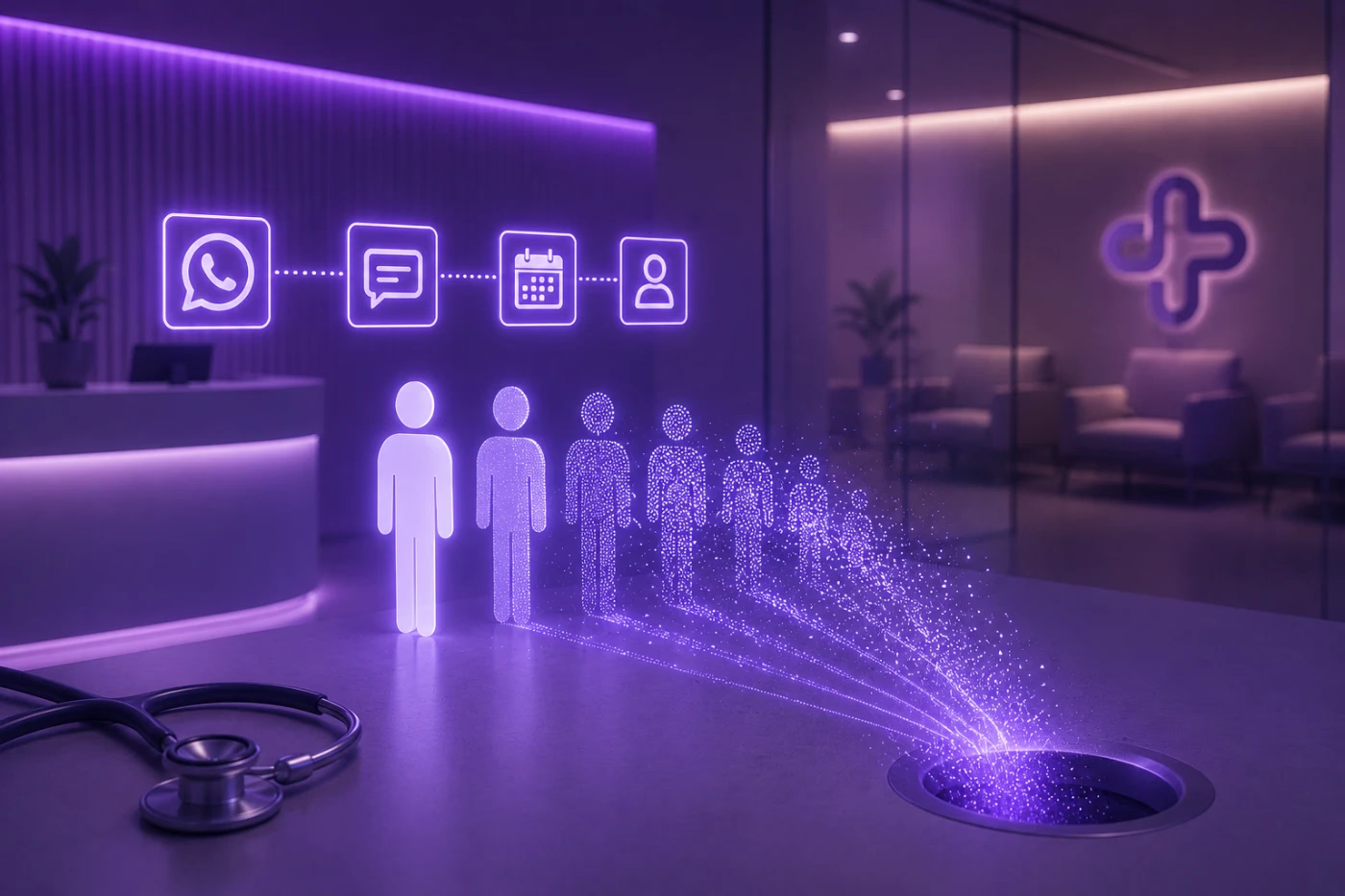
In that four-hour gap, the patient has already heard back from at least one other practice, already compared price and availability, and likely already booked. The practice that answers four hours later isn’t competing for that patient anymore — it’s typing a reply to someone who has already made her decision. And the most expensive part of this scenario is that the practice never finds out it lost the appointment. There’s no visible sign of the mistake, just an unanswered message that, for business purposes, is functionally identical to a message that never arrived.
Speed, in this context, isn’t just an operational detail. It’s the strongest signal of professionalism a patient receives before she ever walks through the door. Someone who replies in 30 seconds signals, without saying a word, that things run smoothly inside that practice. Someone who replies four hours later signals the opposite, even if the treatment and the provider are just as good.
Where the System Actually Breaks
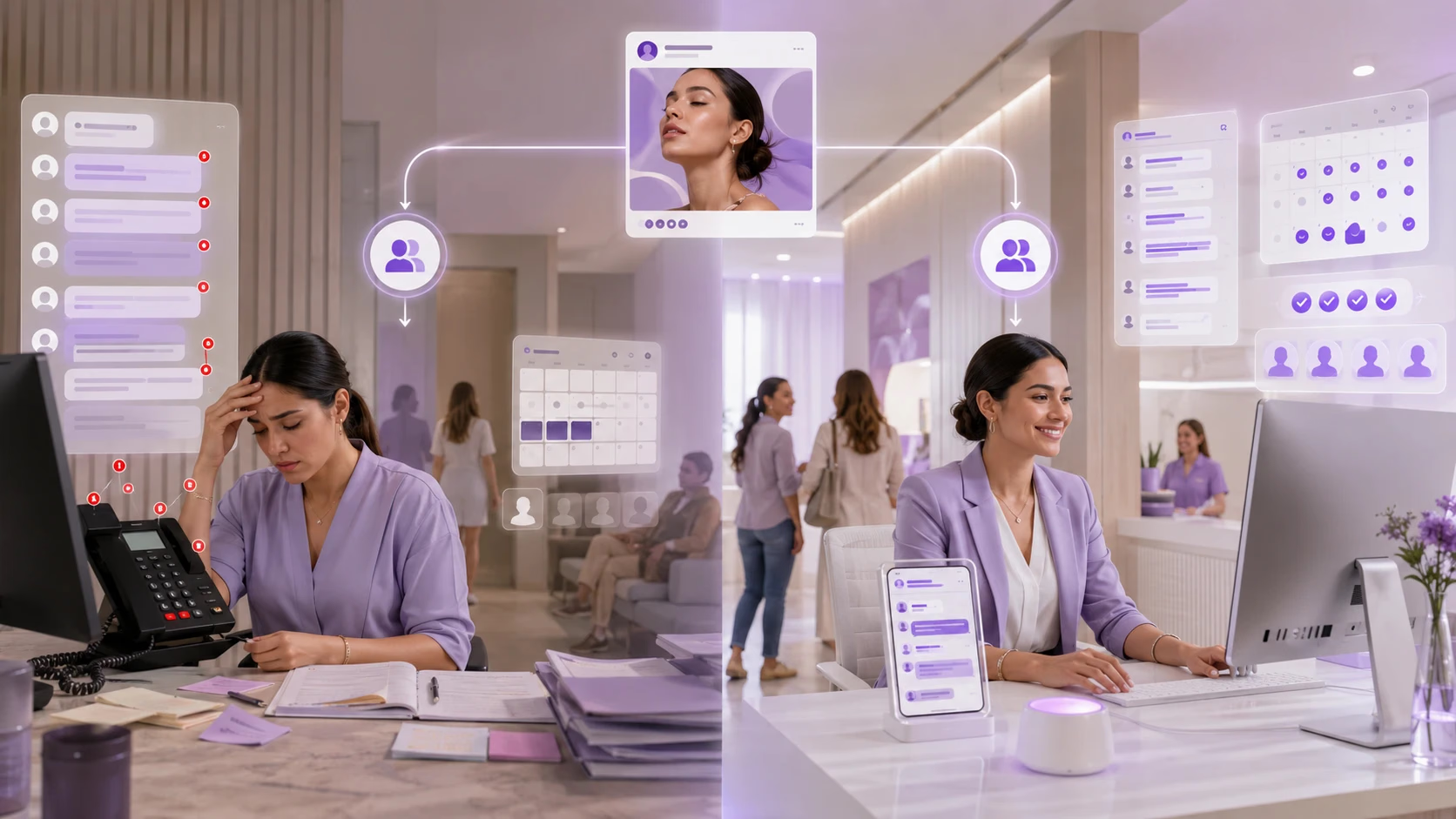
No front-desk coordinator decides to ignore a patient. The real bottleneck comes down to scale: a practice fielding anywhere from 30 to 100 inquiries a week across texting, Instagram, and the website chat can’t guarantee someone is free, uninterrupted, at the exact minute each patient reaches out. While staff is checking in a walk-in, pulling a chart, or helping the patient already in the room, texts pile up as a second screen nobody is watching closely enough, often during the exact hours when the most new patients are reaching out.
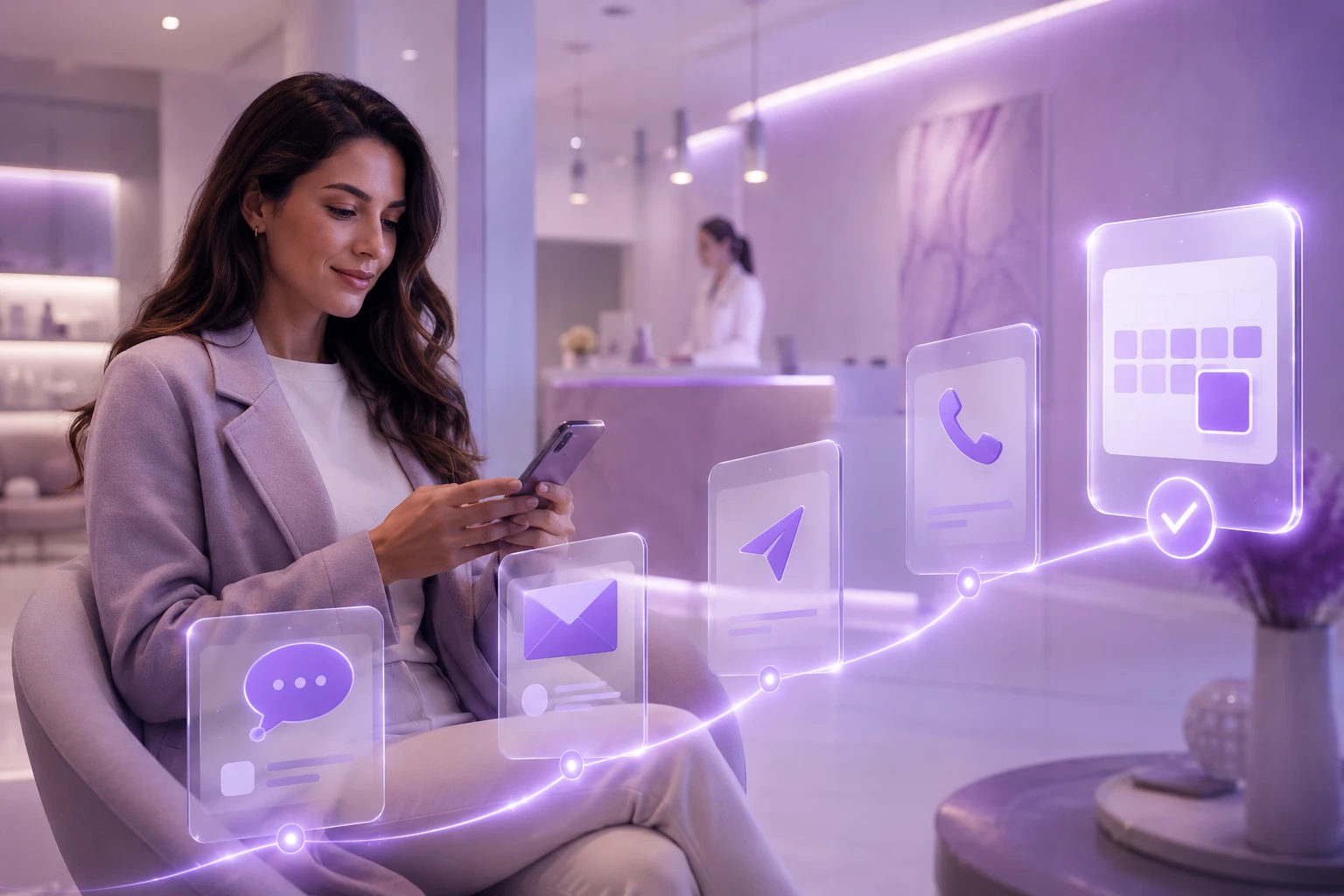
That’s where an AI receptionist comes in: a conversational agent trained on the specific tone, treatment menu, and pricing of the practice, that replies instantly across texting, Instagram, and the website, no matter the hour or how many conversations are happening at once. The staff still owns every clinical conversation and every in-person visit. What changes is that no prospective patient sits waiting for a reply while the front desk is tied up with something else. It answers the first question in seconds, explains the treatment, handles common questions, and books the appointment inside the same conversation, without making the patient wait for a free slot. It also logs every conversation in a CRM that shows, with real data instead of guesswork, how many patients are reaching out, how many are booking, and exactly where the rest are falling off.
Once that first contact is resolved in seconds, the human team gets its time back for what actually requires clinical judgment: answering complex questions, following up on treatments in progress, and taking care of the patients already in the chair.
If you want to know how many leads your practice is losing and exactly where that’s happening, at Floix Growth we can run that analysis together. The starting point is your own numbers, not industry averages.
Frequently Asked Questions
How much time do I actually have before I lose a prospective patient?
The first five minutes matter most: the odds of qualifying that lead drop by as much as 80% after that window. Past the first hour, the drop-off becomes severe, and by 24 hours, the chance of recovering that interest is nearly gone.
Why does a patient choose the practice that replies first instead of the highest-rated one?
Because at the moment she reaches out, she’s actively comparing options and her intent is at its peak. Whichever reply gives her enough confidence to take the next step tends to win, regardless of the other practices’ reputation or pricing.
Does an AI receptionist replace my front-desk staff?
No. It handles the first response, initial patient qualification, and booking inside the conversation, freeing up staff to focus on clinical care and the cases that actually require medical judgment.
How do I know how many patients I’m losing to slow response times?
Most practices don’t, because nobody is tracking it — an unanswered message doesn’t trigger any visible alert. A system with an integrated CRM shows how many conversations start, how many turn into booked appointments, and exactly where the rest drop off.
Does this matter outside of office hours too?
Yes, and it’s actually where practices lose the most. A significant share of treatment inquiries arrives after hours, and those patients don’t wait until the next morning — they text another practice immediately if they don’t hear back.
We diagnose your operation and show you exactly which module solves your bottleneck.