When revenue drops, the first thing most clinic owners blame is Meta’s algorithm — the campaign stopped bringing in good leads, the audience got saturated, a competitor outbid them. It’s a comfortable explanation because it points outward. The problem is that in most of the cases we’ve reviewed, the campaign is still delivering the exact same volume and quality of leads it always did. What changed is what happens after the click.
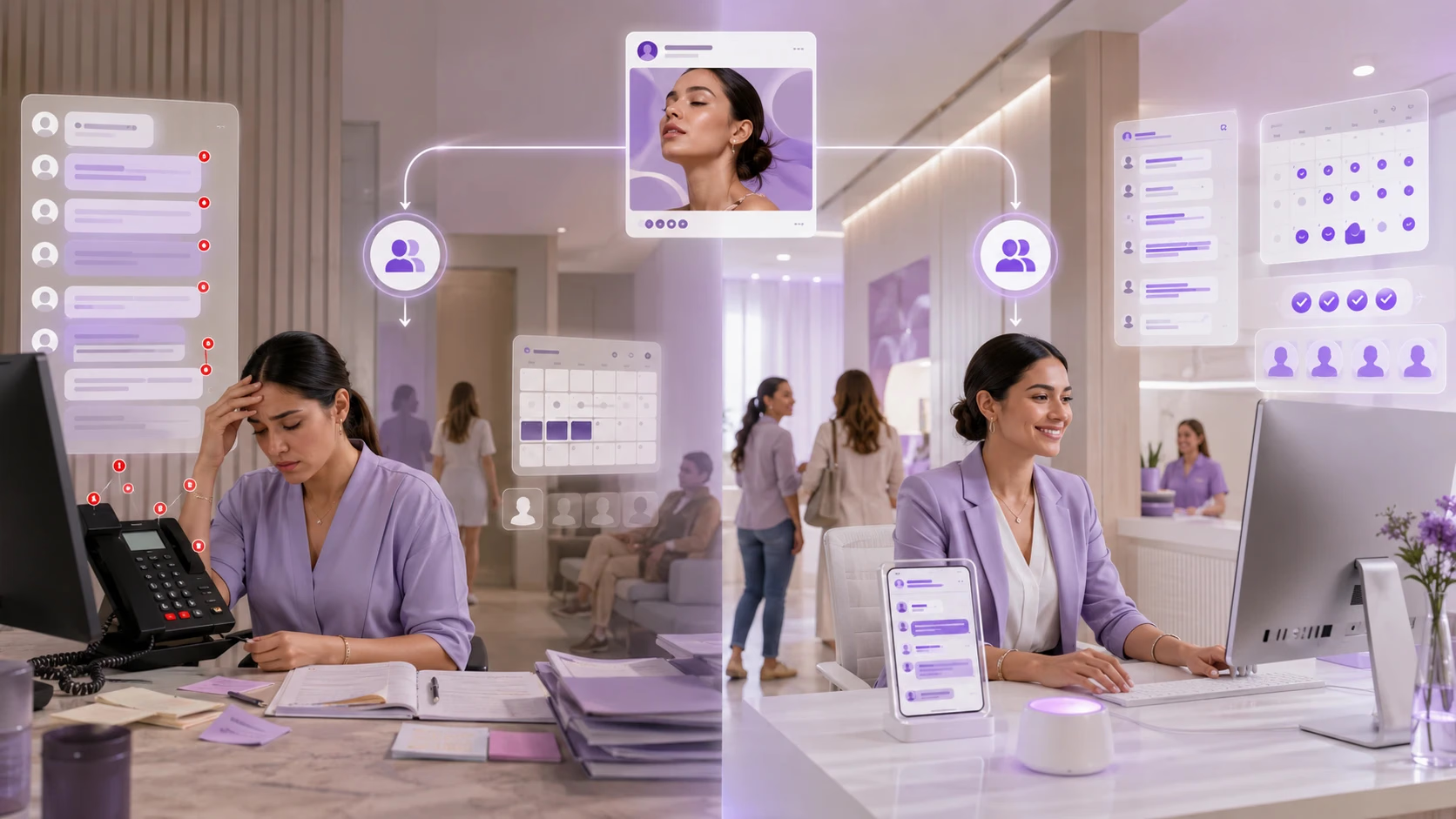
Take the example in this article’s title: two aesthetic clinics, same monthly Meta Ads spend, same target audience, nearly identical creative. One brings in double the revenue of the other on the same budget. The gap isn’t in the ad — it’s already proven itself, since it’s generating the same volume of interested prospects for both clinics — it’s in each clinic’s operational capacity to take that prospect and turn them into a booked, seen, and eventually recurring patient.
The Click Is Already Paid For. The Sale Isn’t
Meta Ads does one specific job, and it does it well: it puts the clinic in front of someone with real intent to solve an aesthetic or health concern, and gets that person to send a message. That’s the edge of what the platform controls. From there, the conversation moves to a human team, and that’s exactly where the system tends to break down without anyone noticing — because it doesn’t produce a visible complaint. The patient simply never writes back, and the clinic never finds out that lead existed at all.
Industry numbers confirm this leak is systematic, not occasional. Research on lead handling in aesthetic medicine shows that responding after fifteen minutes cuts conversion probability by 80%, and the average response time to a WhatsApp message at a clinic without automation runs between 27 and 90 minutes during business hours, stretching to several hours after hours. A study on commercial messaging expectations (HubSpot’s Consumer Messaging Preferences and Zendesk’s CX Trends) found that 65% of consumers expect a response within five minutes when they message a business on WhatsApp, and that companies hitting that speed — typically through automated agents — report conversion rates up to 21 times higher than those taking longer than 30 minutes to respond.
In aesthetic medicine specifically, where prospects often reach out on impulse or with a quick question about a treatment, 41% of people who message on WhatsApp and don’t get a reply within ten minutes end up booking somewhere else. They’re not leaving angry. They’re just finding someone faster and moving on with their day.
Why the Budget Goes Up and the Schedule Doesn’t Fill the Same Way
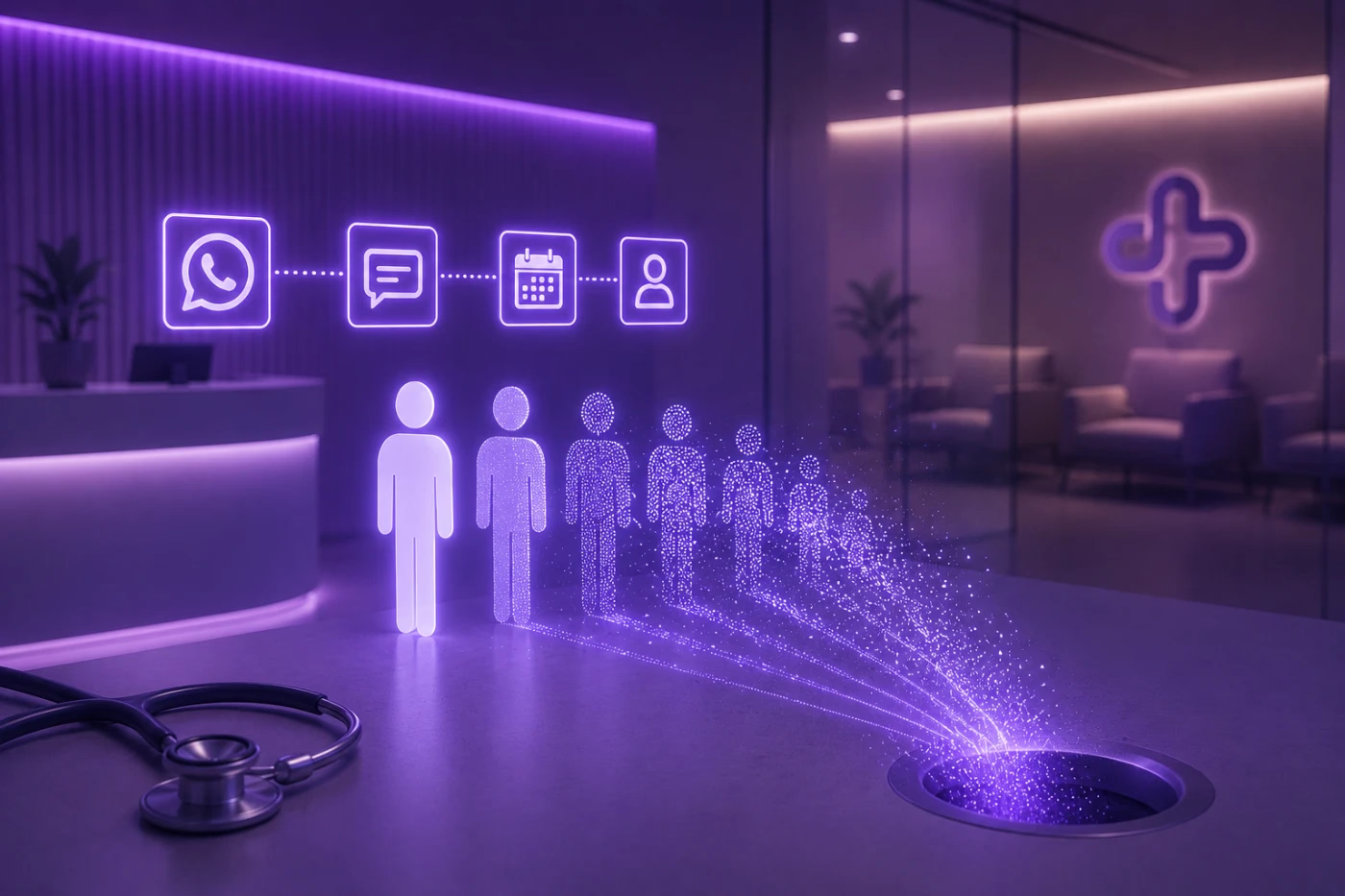
One data point explains a large share of what’s actually happening across markets with high WhatsApp and DM volume: an analysis of more than 200,000 commercial WhatsApp conversations found that 55.1% of qualified leads arrive outside office hours, and that more than 56% of digital ad spend is generating leads in time windows when no one on the team is available to respond. The cost per lead gets paid either way. The lead gets lost either way. And the budget doesn’t come back.
This is why increasing Meta Ads spend without first fixing response capacity tends to reproduce the same problem, only at a higher price: more clicks, the same bottleneck at the front desk, the same share of conversations dying without a reply. A guide on patient acquisition through Meta and Google Ads puts it simply: a lead contacted within the first five minutes is far more likely to book than one contacted the next day, and doubling ad spend without solving that gap just doubles the amount of budget evaporating in the same stage of the funnel.
There’s another leak in that funnel that almost never gets measured: the no-show. Last-minute cancellation and no-show rates at aesthetic clinics without a reminder system run between 12% and 19% depending on the specialty, and close to 70% of same-day cancellations go unfilled because no one contacts the waitlist in time. That empty slot on the calendar is, in practice, a patient the campaign already delivered and the clinic let go twice: once by not responding fast enough, and again by not filling the exact opening that same patient left behind.
What Actually Separates the Clinic That Sells Twice as Much
Back to the two clinics in the example. The one selling twice as much on the same ad doesn’t necessarily have better providers or a nicer office. It has an operation that can sustain three things at once, without depending on the memory or availability of a single front-desk person: it responds in seconds at any hour, it automatically sorts out who has real booking intent from who’s just asking about price, and it follows up with anyone who didn’t book on the first contact instead of letting them go cold in the chat.
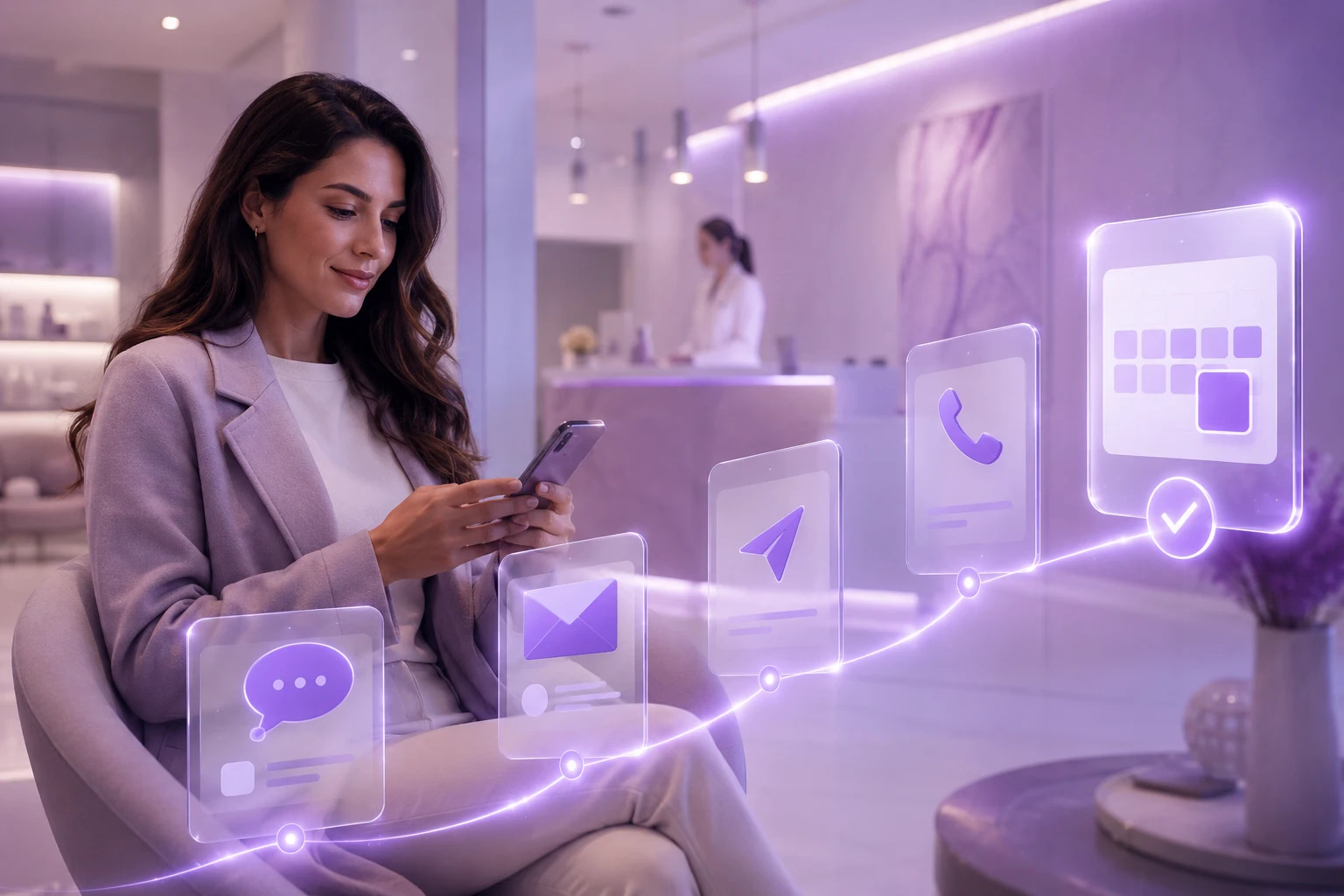
That capacity is now handled by a conversational agent trained specifically on each clinic’s tone and information, running across WhatsApp, Instagram, Messenger, and your website’s chatbox around the clock, without depending on someone from the team being by the phone or at the computer. What matters isn’t that it “replies fast” in the abstract — it’s that it does the full job of the first contact: it identifies what the patient wants, answers questions about treatments and pricing, and books the appointment directly inside the same conversation, without redirecting the person to an external link or asking them to call.
That same system is also what handles the second half of the problem, the one almost nobody attacks because it never shows up in a campaign report: the patient who already came once and hasn’t been back. Reactivating that base with automated appointment reminders and follow-up sequences for inactive patients generates revenue without spending another dollar on advertising, because that patient already cleared the hardest trust barrier — the first visit. An integrated CRM that logs and segments every conversation also makes it possible to see, with real data instead of a guess, exactly where in the pipeline people are being lost: at first contact, at appointment confirmation, or with the patient who never came back.
Before You Increase the Budget, Look at These Three Numbers
Before asking the marketing team for more budget, three numbers say more about a clinic’s real growth ceiling than any Meta Ads metric: average response time to an incoming message, the share of contacted leads that actually book a first appointment, and the share of that schedule lost to unfilled no-shows. Cross-referenced, these three numbers show precisely whether the problem sits in acquisition or in conversion, and in the vast majority of cases we’ve seen across clinics in the US and Latin America, the second stage is where the real revenue loss concentrates.
If you want to understand how many leads your clinic is losing right now, and exactly where in the process that loss is happening, Floix Growth can run that diagnostic with you. The starting point is your clinic’s actual numbers, not industry averages.
Frequently Asked Questions
How do I know if my problem is the Meta Ads campaign or internal conversion?
Check your real response time to incoming leads and your booking rate on those contacts. If the campaign is delivering the same volume of interested prospects it always did but the schedule isn’t filling the same way, the problem is conversion, not the ad platform.
How fast do I need to respond to a lead messaging on Instagram or WhatsApp?
Ideally under five minutes. After fifteen minutes, conversion probability drops sharply, and after a few hours that patient has usually already booked with another clinic.
Does an AI receptionist replace front-desk staff?
No. It frees up the time currently spent on repetitive messages and manual scheduling, so the team can focus on in-person care and the patients already in the office.
Is it worth fixing conversion before increasing ad spend?
In most cases, yes. Every percentage point gained in response speed and follow-up translates directly into more booked appointments on the same budget, while increasing spend without fixing conversion usually just multiplies the same leak.
We diagnose your operation and show you exactly which module solves your bottleneck.