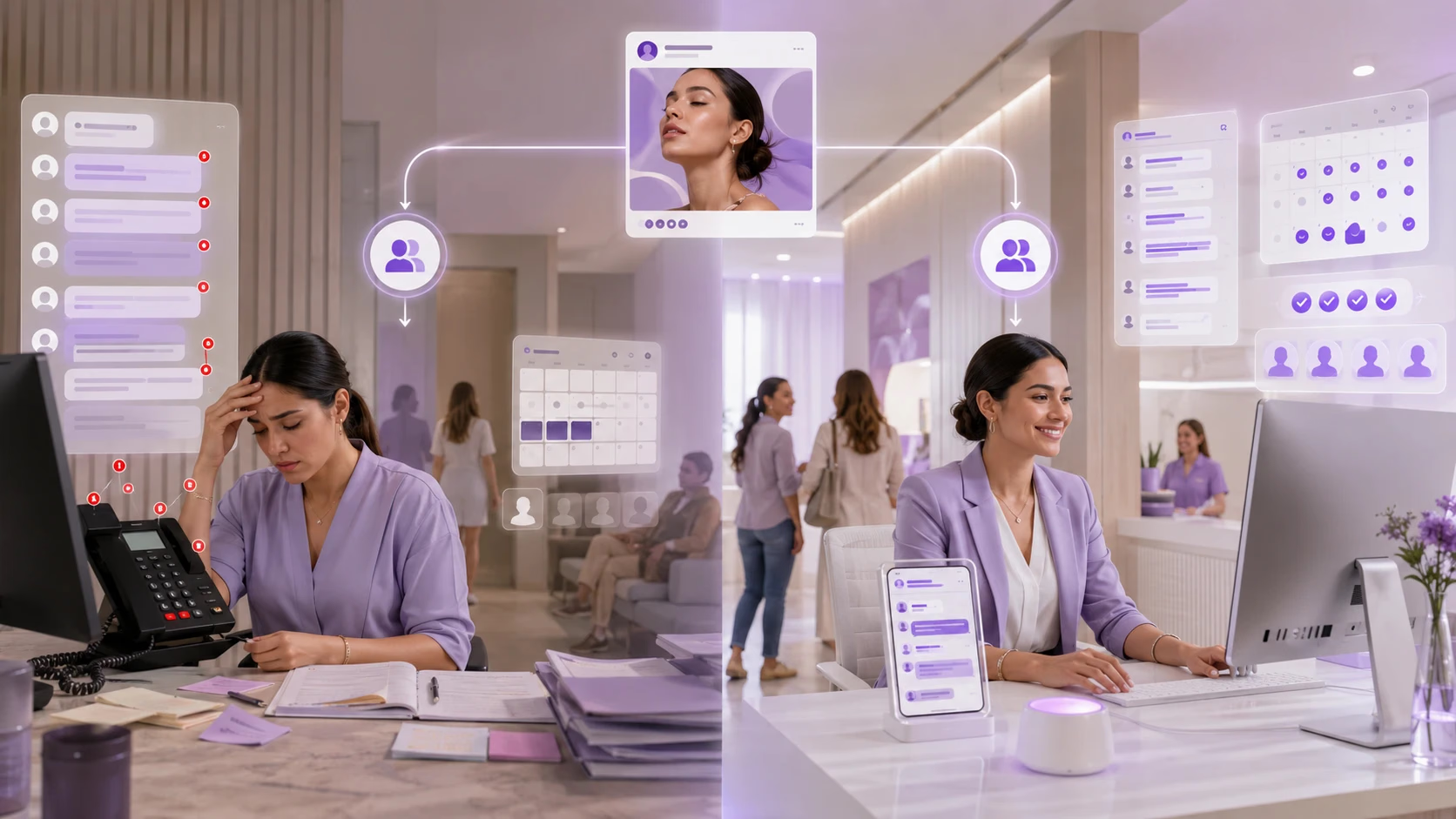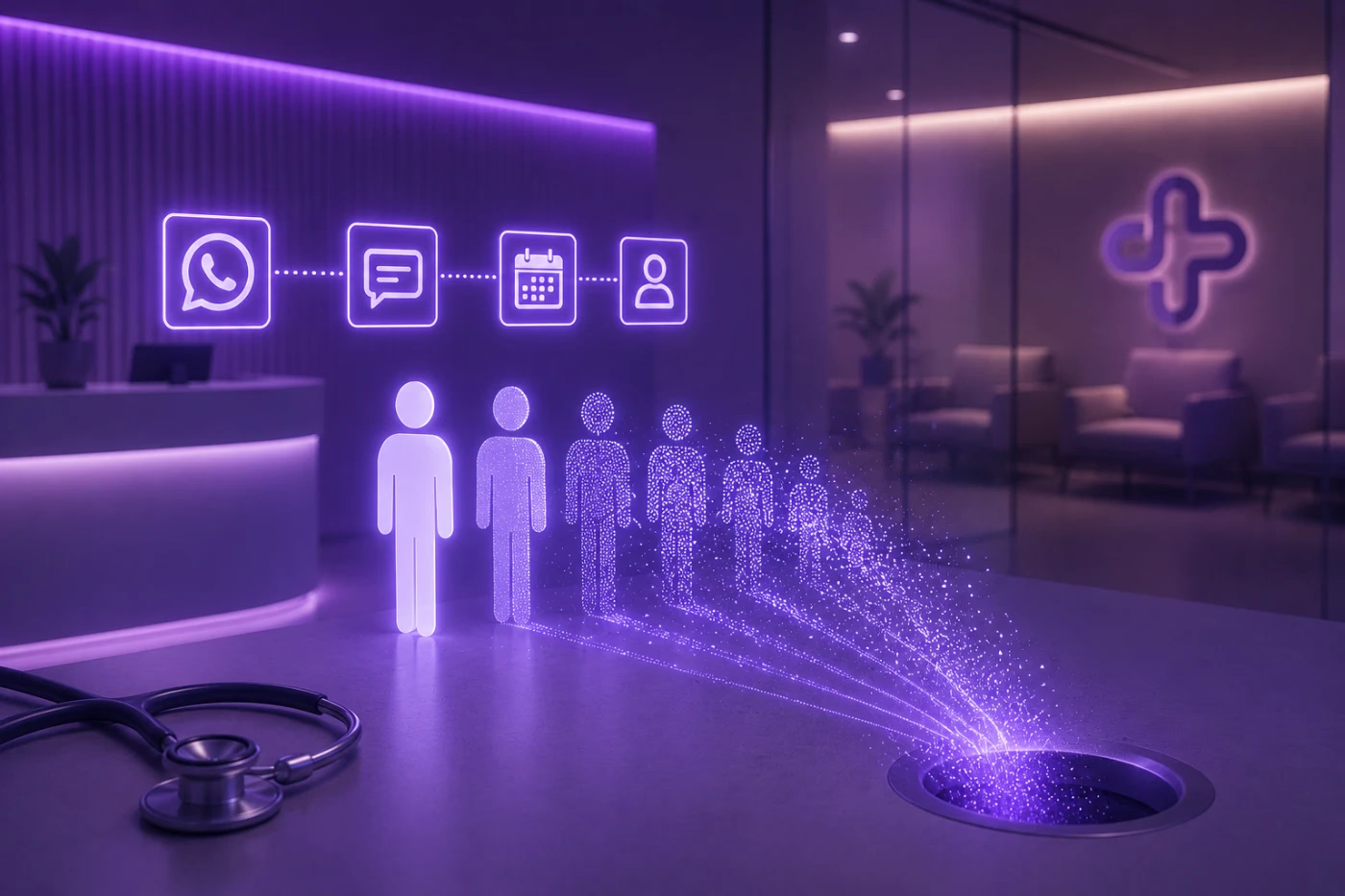
The pattern shows up in almost every clinic CRM we review: a first response message, sometimes a second one the next day, and then the record goes quiet. The lead gets tagged as “no reply” and the ad budget keeps pulling in new people to repeat the cycle. Data from Invesp on commercial follow-up behavior shows exactly why that dynamic bleeds money: 80% of sales require five or more follow-up contacts, 44% of teams give up after the first attempt, and only 8% make it past five contacts. The closing distribution makes it even clearer — 2% of deals close on the first contact, 3% on the second, 5% on the third, 10% on the fourth, and the remaining 80% fall somewhere between the fifth and twelfth touchpoint.
A patient follow-up sequence is the ordered set of contacts a clinic makes with a potential patient from the moment they submit their information until they book an appointment — a defined number of messages, a specific interval between each one, and a channel assigned to each stage. For medical and aesthetic clinics, a functional sequence runs between six and eight contacts distributed over thirty days, with the first three concentrated in the initial 72 hours and a monthly cadence afterward for those who haven’t booked yet.
The Window Where Everything Gets Decided Lasts Less Than a Coffee Break
The foundational study on response times was conducted by Dr. James Oldroyd at MIT, published through InsideSales.com and amplified by Harvard Business Review after analyzing 2.24 million leads. The central finding: responding within the first five minutes makes you 100 times more likely to establish real contact compared to responding at 30 minutes, and 21 times more likely to qualify that lead. Companies that wait more than 24 hours are 60 times less likely to qualify a lead than those who respond within the first hour.
Healthcare is, according to data compiled by InfluxMD, the slowest-responding sector of all those measured: an average first response time of 2 hours and 5 minutes, with only 27% of leads receiving any contact at all. The average conversion rate for a medical practice sits at 3.2%, while top-quartile clinics reach 21%. That nearly sevenfold gap is explained far more by the operational infrastructure handling those first minutes after someone writes in than by ad quality or treatment pricing.
In aesthetics the effect intensifies because demand concentrates outside business hours. Someone inquiring about a treatment at 10:40 PM on a Sunday is usually messaging three or four clinics in the same session, and response order acts as a filter before any clinical argument even enters the picture.
Six Contacts Over Thirty Days: The Number Almost No One Hits
Five contacts as a minimum viable threshold is a floor, not a target. Reactivation data compiled by Dialog Health shows that making four to five contact attempts across different channels increases recovery rates by 81% compared to single-attempt outreach, and that using three different channels allows a clinic to reach more than 95% of patients lost to follow-up.
There’s a structural reason behind this: 63% of people who request information about a service don’t purchase for at least three months. In aesthetic procedures the cycle stretches further, because the decision combines budget, personal schedule, recovery time, and an emotional component that rarely resolves in the first conversation. A lead that doesn’t respond to the second message is still within their normal decision window — the team that reads that silence as a rejection is discarding patients who will get the procedure somewhere within the next ninety days.
Subsequent cadence is also measured. Data aggregated by LeadResponse shows that follow-up with 21-to-30-day intervals on long-cycle opportunities is associated with 47% higher conversion than weekly follow-up, which tends to generate fatigue and blocks.
The First Fourteen Days, Hour by Hour
The first contact needs to go out in under five minutes, through the same channel the inquiry came in on, and it has to accomplish two things simultaneously: answer the specific question the person asked and offer a concrete appointment time. A message that only thanks them for their interest and announces that “someone from the team will be in touch” wastes exactly the highest-intent window.
The second contact goes out the same day, three to four hours later, and its job is to resolve the objection that stopped the response. In aesthetics those objections are predictable and finite: price range, discomfort, recovery days, duration of results. Anticipating them in the second message means the lead doesn’t have to write back to ask something they probably won’t ask.
Between 24 and 48 hours, the third contact comes in — and the material that works best here is visual evidence and professional credentials: before-and-after results from the same procedure, the profile of the specialist who would see them, verifiable reviews. The fourth contact goes out between day four and five and returns to the direct scheduling question with two specific time options, because a closed question converts better than an open invitation.
Around day eight or ten, it’s worth shifting the angle to content that builds judgment rather than pushing the appointment: how to choose between two similar treatments, what to ask during a consultation, what signals suggest someone isn’t a candidate yet. The sixth contact, close to day fourteen, closes the intensive cycle by offering an explicit opt-out along the lines of “would you prefer we pick this back up in a month?” That question seems minor and does significant work — it segments the database between those who’ve decided against it and those who are simply postponing, and enables the monthly cadence on the second group without burning the list.
The Channel Where 98% of Messages Get Opened
The Twilio Messaging Engagement Benchmark Report, based on analysis of 4.8 billion WhatsApp messages across 62,000 business accounts, reports an average open rate of 98.2% for WhatsApp, compared to a global average email open rate of 21.4%. More conservative measurements place WhatsApp opens between 68% and 90%, and even at the low end the gap with email holds at a factor of three to five times. The figure that matters most for a sequence, though, is speed: around 78% of WhatsApp messages are opened within the first five minutes of delivery, making it the only channel that lets you sustain a cadence with measurable response times.
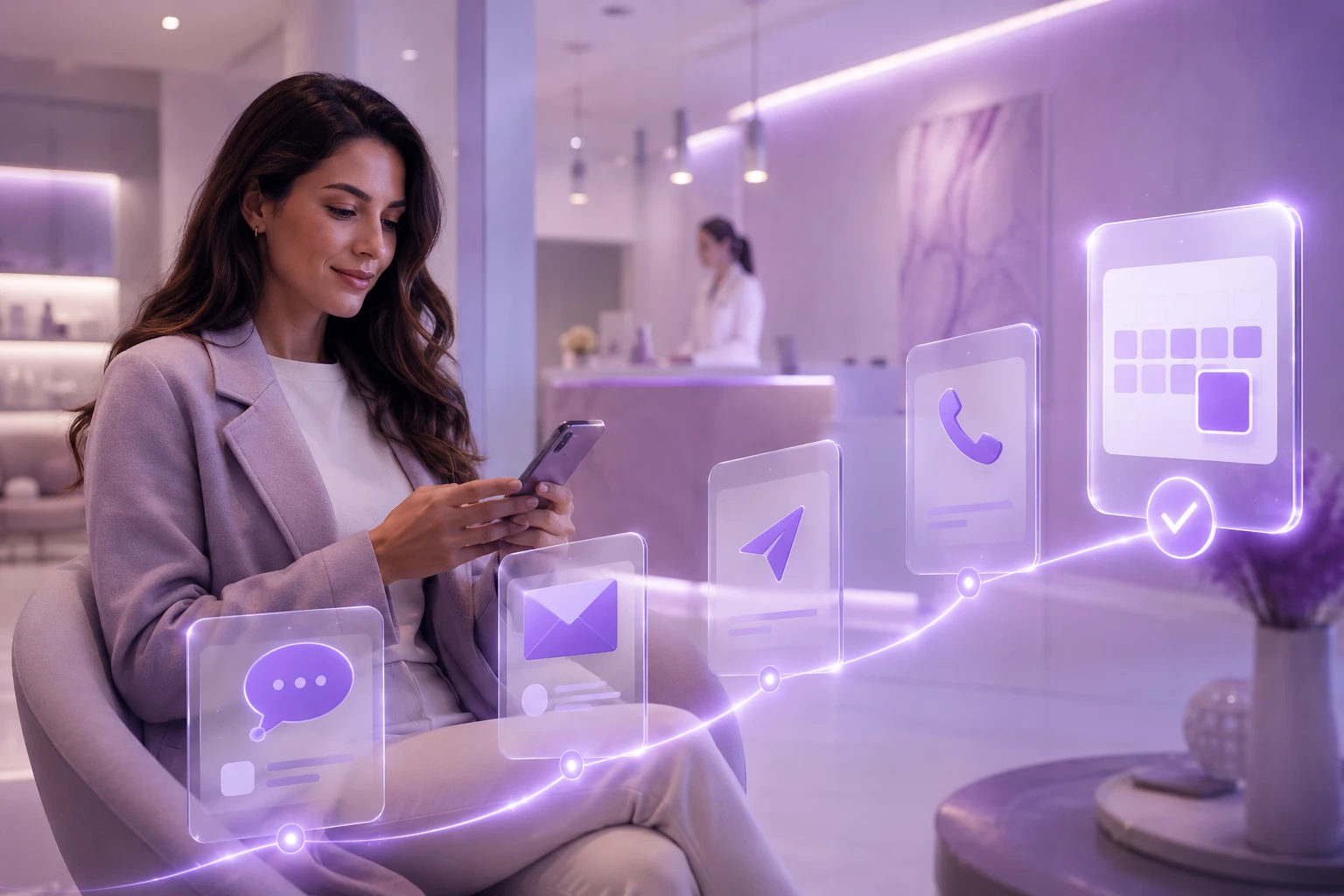
The operational rule that follows is simple and almost never respected: the sequence continues on the channel where the person first reached out. A lead who wrote through Instagram and receives an email follow-up has a marginal probability of responding; that same lead followed up on Instagram keeps the conversation open. WhatsApp, Instagram, Messenger, and the website chat need to function as a single conversation with a shared history, rather than four inboxes reviewed in rotation.
The same principle governs the post-booking stage. An athenahealth analysis of 57 million appointments found that those confirmed via messaging recorded a 4.4% no-show rate — less than half the 9.4% observed for appointments confirmed through other means. The reminder is part of the sequence with the same weight as any other contact.
When the Sequence Stops Depending on Someone Remembering
None of these numbers are new to a clinic director. The real obstacle is scale: a clinic receiving 200 inquiries per month that applies six contacts per lead needs to execute 1,200 interactions monthly, at exact times, without repeating messages, and without losing track of what each person already asked. That volume clearly exceeds what a front desk can sustain while also managing the waiting room, preparing rooms, and handling the day’s calendar.
That’s where an AI receptionist changes the operational equation. A conversational agent trained on the clinic’s tone and information responds within seconds at any hour over WhatsApp, Instagram, Messenger, and the website chat, automatically registers each person in a CRM that classifies and segments them, and moves them through a pipeline with defined stages where every pending contact has an assigned date and content. Scheduling happens inside the same conversation, with a native calendar, without redirecting the person to an external form that introduces friction right at the moment of highest intent. Appointment reminders go out automatically and reactivation sequences trigger based on time elapsed since the last visit.
The List of Patients Who Already Paid You Once
The same sequence logic applied to the inactive patient base tends to outperform sequences applied to cold leads. Reactivating a dormant patient costs five to twenty-five times less than acquiring a new one, and the conversion odds are in a different class: the foundational research by Farris and colleagues in Marketing Metrics estimates a 20% to 40% probability of winning back a lost customer, versus 5% to 20% for converting a brand-new prospect.
The determining factor is dormancy length. Industry benchmarks place reactivation rates at 25% to 35% for patients with 6 to 12 months of inactivity, between 15% and 25% for the 12-to-18-month range, between 10% and 15% from 18 to 24 months, and below 8% after two years. A clinic sitting on 800 historical records that has never run a reactivation sequence is watching its most profitable asset degrade month by month in the absence of an automatic contact routine.
The Five Numbers That Tell You Whether the Sequence Works
A sequence without measurement is an expensive intuition. The indicators that define whether it’s functioning are average first response time measured in minutes, the actual number of contacts per lead before discard, cumulative booking rate by contact number, no-show percentage on confirmed appointments, and reactivation rate by dormancy window. As an external benchmark, Zenoti data places the median online booking rate for aesthetic clinics at 13%, with the 90th percentile at 32% — which gives a sense of the gap available between an average operation and a well-executed one.
If you want to know how many contacts your clinic is actually making before writing off a lead, at Floix Growth we can go through those numbers with you and build the sequence that fits your volume and your treatments. The starting point is always your own conversation history, not a sector average.
Frequently Asked Questions
How many times should you contact a potential patient before giving up?
Between six and eight contacts distributed over thirty days, followed by a monthly cadence. Commercial data shows that 80% of closes happen between the fifth and twelfth contact, while 44% of teams abandon after the first attempt.
What is the maximum acceptable response time for a new inquiry?
Five minutes. Responding within that window makes contact 100 times more likely compared to responding at 30 minutes, according to the MIT study published through Harvard Business Review on 2.24 million leads.
Doesn’t following up that many times annoy the patient?
What generates pushback is repeating the same message, not the frequency. Each contact should add new information — pricing, recovery, results, selection criteria — and the sixth should offer an explicit opt-out to pause follow-up, which segments the base without burning it.
Which channel should you use at each stage of the sequence?
The same one the inquiry came in through. WhatsApp, Instagram, Messenger, and the website chat need to operate with a shared history, because moving a patient to a different channel sharply reduces response rates.
When is a patient considered inactive for a reactivation sequence?
From six months without a visit, with priority on the 6-to-12-month window, where reactivation rates reach 25% to 35%. After 24 months, recovery falls below 8%.
We diagnose your operation and show you exactly which module solves your bottleneck.