The Number Nobody Wants to Look At in the Lead Spreadsheet
If you have ever pulled up the list of people who asked for pricing, information, or “more details” over the last three months, you already know how it feels. There are names, there are phone numbers, there are dozens of conversations that looked like real opportunities at the time. And then nothing. No appointment booked, no reply to the follow-up messages, no clear reason why they went cold.
This is not an exaggerated impression, and it is not a problem unique to your clinic. The average referral conversion rate in healthcare — patients who get referred and actually show up to book — sits at roughly 7.2%, and health systems lose between 55% and 65% of those referrals along the way, according to data from FMT Studio’s research on healthcare lead generation. Apply that same logic to any medical or aesthetic clinic fielding inquiries through WhatsApp, a web form, or a phone call, and the pattern repeats with uncomfortable clarity: most people who ask for information never make it to the chair.
The problem is not the volume of inquiries coming in. It is the assumption that “asked for info” means “about to book.” It does not, and treating both the same way is exactly why so much gets lost.
Asking for Information Is Not the Same as Wanting an Appointment
A patient who messages asking for pricing or details is in an evaluation stage, not a decision stage. They are comparing, gathering data, checking whether the treatment fits this month’s budget, possibly asking the same question to two other clinics at the same time. That person is not ready for “what day works for you?” in the first message, and when a clinic responds as if they were, the patient feels sales pressure and shuts down.
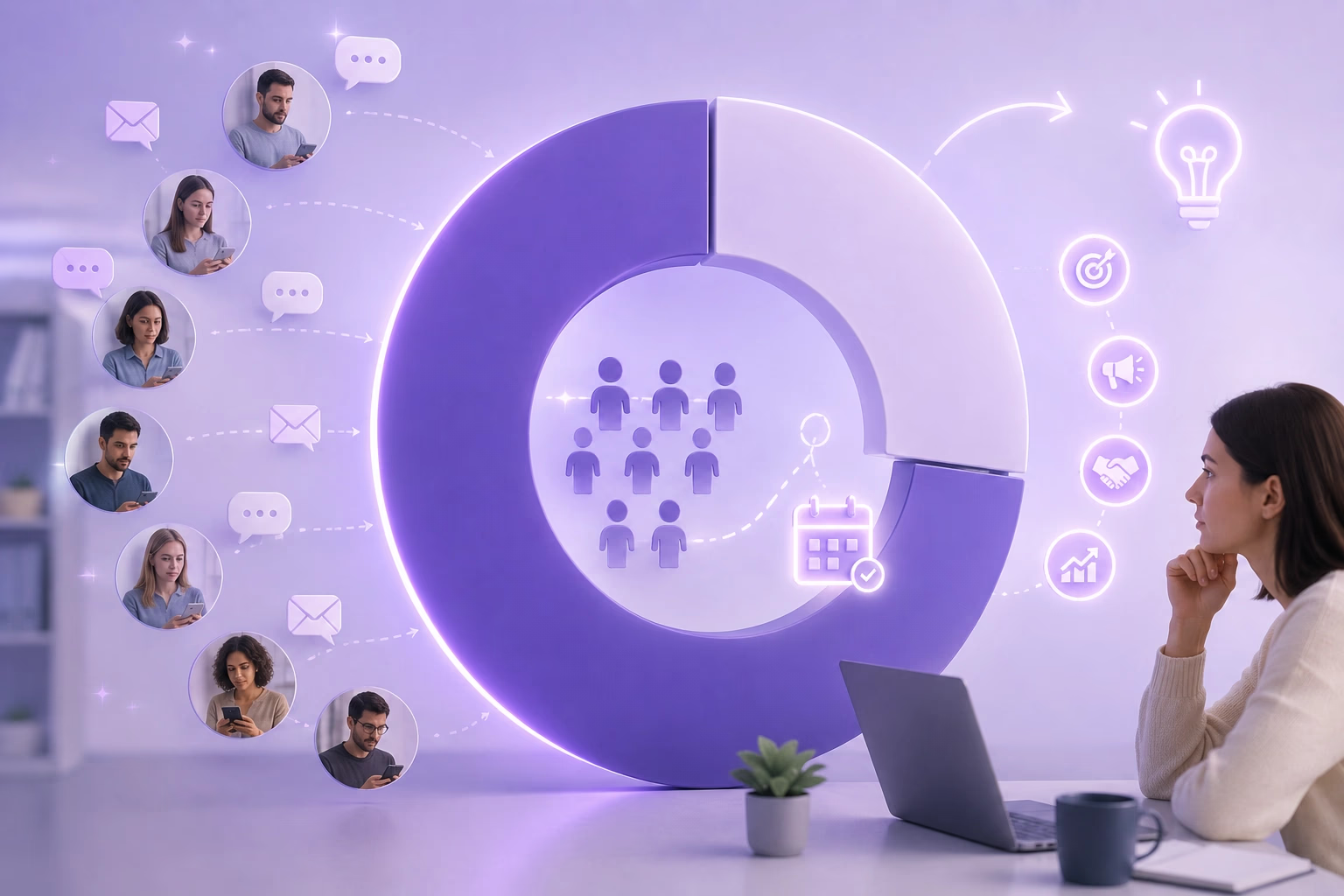
This is not opinion. Research on lead behavior across service industries shows that only about 25% of people requesting information are actually ready to move forward at the moment of first contact. The rest need time, context, and most of all, someone to reach back out at the right moment. Confusing an informational inquiry with purchase intent makes a clinic fire off the wrong message at the wrong time, and then act surprised when “they stopped responding.”
Here is the definition worth keeping in mind before going further: an information lead is a patient who showed enough interest to contact the clinic, but who has not yet decided to book. That gap — between interest and intent — is what determines whether an inquiry turns into revenue or just becomes another unanswered row in the spreadsheet.
The Minute That Decides Everything
Here is the number that is hardest for a clinic used to responding “whenever there’s a free moment” to swallow: response speed is, by a wide margin, probably the single most decisive variable in the entire conversion process.
A Harvard Business Review study that analyzed 2.24 million sales leads found that companies attempting contact within the first hour were nearly seven times more likely to qualify the lead than those that waited just 60 minutes longer. Companies that took 24 hours or more were 60 times less likely to qualify the lead compared to those that responded within that first hour. And yet, according to that same study, only 37% of companies respond within those first sixty minutes.
An earlier study, run by InsideSales.com together with MIT’s Kellogg School of Management across more than 100,000 contact attempts, found something even more drastic: contacting a lead within the first five minutes makes them 21 times more likely to qualify, compared to waiting 30 minutes. The odds of making successful contact at all are up to 100 times higher in those first five minutes than they are thirty minutes later.
The problem is that average lead response time at mid-sized companies, according to data compiled by several sales automation firms, runs past 47 hours. That is nearly two full days in which the patient has already messaged another clinic, already gotten a reply from that other clinic, and already booked there. Not because that clinic was better. Because it answered first.
The Real Money Gets Lost After the First Message
Let’s say your clinic does respond fast. Good news, but not enough. Most conversions do not happen on first contact — they happen in the follow-up, and that is exactly where almost every clinic gives up too soon.
The sales data here is just as blunt. Only 2% of deals close on the first contact. 80% require between five and twelve follow-ups to close. And 44% of people doing the following up quit after a single attempt. Worse still: 92% give up after the fourth attempt, even though 80% of successful conversions happen from the fifth contact onward, and a meaningful share of leads that do eventually convert were reached on the sixth attempt.
Translated to a clinic, this means the patient who asked for information three weeks ago and “never wrote back” probably did not decide they weren’t interested. They decided it wasn’t the right moment, and nobody showed up in their WhatsApp again to remind them at a better one. The clinic wrote off a patient who was, in fact, still well within their decision window — and that window is longer than most front-desk teams assume. Studies on purchasing behavior in services show that 63% of people who request information from a company take about three months to decide, and another 20% take more than a year.
Three months. That is, in practical terms, exactly how much time a clinic hands away every time it marks a lead “cold” after the second unanswered message.
What Changes When You Stop Treating It as a Loose Task
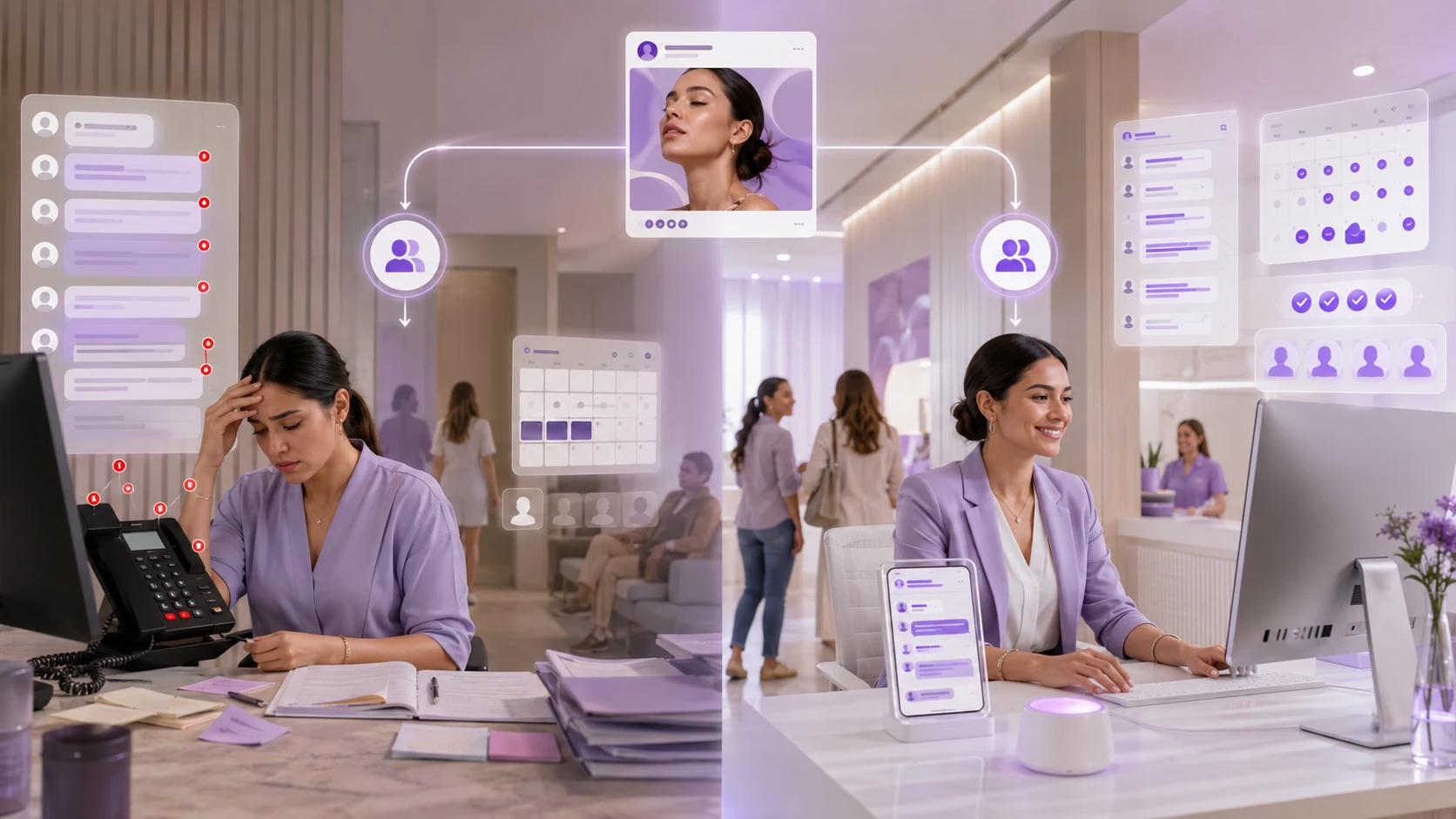
Following up with patients who requested information does not work as a stray task that someone at the front desk handles “when there’s time.” It works as a system, with clear rules: how long between the first message and the response, how many follow-ups happen, through which channel, and what each one says.
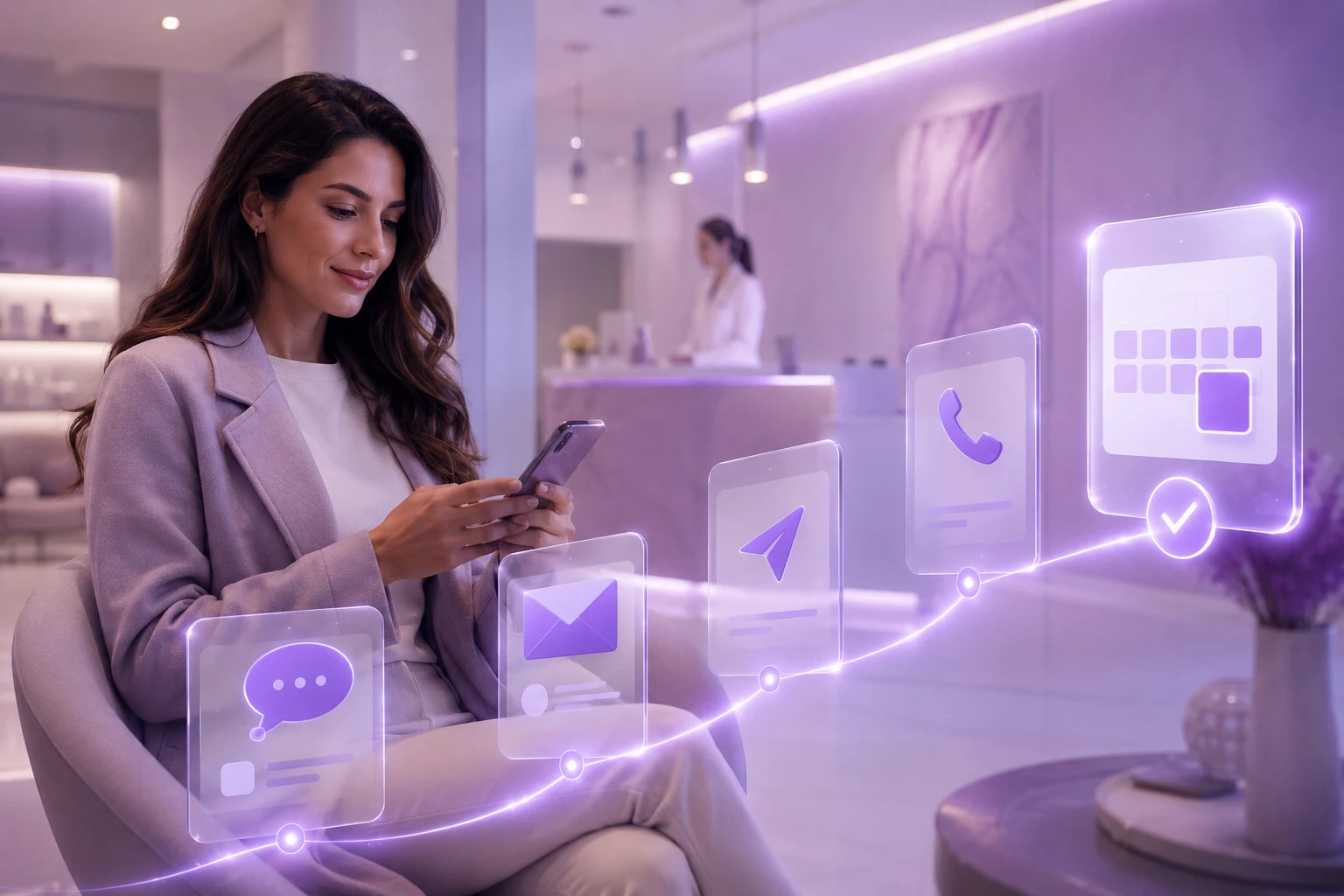
The channel matters more than it seems. WhatsApp and SMS messages have open rates near 98%, and most get read within three minutes — far ahead of email. For a patient comparing several options at once, a message that arrives and gets read instantly has a much better shot at a reply than an email sitting unopened in an inbox.
The sequence matters too. Sending the same generic message three times is not the same as building a sequence where each touchpoint adds something new: the first answers the specific question, the second addresses a common objection (price, timing, doubts about the procedure), the third offers a concrete next step like a no-cost evaluation visit. Every message needs to give the patient a new reason to respond, not repeat the same question without added context.
And speed has to stop depending on whether someone happens to be free at that moment. A front-desk team, no matter how capable, cannot be available around the clock to respond within five minutes every time an inquiry comes in, nor remember to send the sixth follow-up to every patient on the list. That is why the clinics solving this best are doing it with automated systems that respond instantly, qualify the inquiry, and trigger the follow-up sequence without depending on any one person’s memory or availability. The technology does not replace the human touch of the in-person consultation; it removes the risk that the consultation never happens because nobody answered in time.
The Spreadsheet Isn’t a Graveyard. It’s a Waiting Room.
Every name on that “asked for info, never booked” list is not a lost patient. It is a patient waiting for someone to show up again at the right moment, with the right message, before they settle for the clinic down the street that answered fast and followed up. The difference between a clinic that grows with the same volume of inquiries it already gets and one that has to keep spending more on ads to fill the schedule is not in acquisition marketing. It’s in what happens after the first message, when nobody’s watching.
Frequently Asked Questions
Why do so many patients ask for information and then never book? Because requesting information is an evaluation stage, not a decision stage. Most people are comparing options and need time, and they only respond when someone reaches back out at the right moment with a message that adds something new instead of repeating the original question.
How fast do I need to respond to a patient who requested information? Ideally within the first five minutes. Sales research shows responding in that window makes a lead up to 21 times more likely to move forward, compared to waiting 30 minutes. Past the first hour, those odds drop sharply.
How many follow-ups should I send before writing off a patient? At least five or six. Most conversions don’t happen on first contact: 80% of sales require between five and twelve follow-ups, and many close on the fifth or sixth attempt — right around when most teams have already given up.
Should follow-up happen over WhatsApp, SMS, or email? WhatsApp and SMS have open rates near 98% and get read within minutes, while email tends to sit unopened much longer. For patients comparing clinics, the channel that gets read immediately has a far better shot at getting a timely reply.
Is it worth automating this follow-up, or is front-desk staff enough? No person, however organized, can respond within five minutes around the clock or remember the sixth follow-up for every patient on the list. Automating the initial response and the follow-up sequence keeps conversion from depending on any one person’s availability or memory.
Translation notes: “informes” was rendered as “information” throughout rather than the literal “reports,” since that is the natural English term for what patients are actually requesting (pricing, treatment details). The closing line (“La planilla no es un cementerio, es una sala de espera”) was adapted into a punchier two-sentence English equivalent (“The Spreadsheet Isn’t a Graveyard. It’s a Waiting Room.”) to preserve the column-style punch rather than translating literally. All statistics, sources, and figures were kept identical to the Spanish original.
We diagnose your operation and show you exactly which module solves your bottleneck.