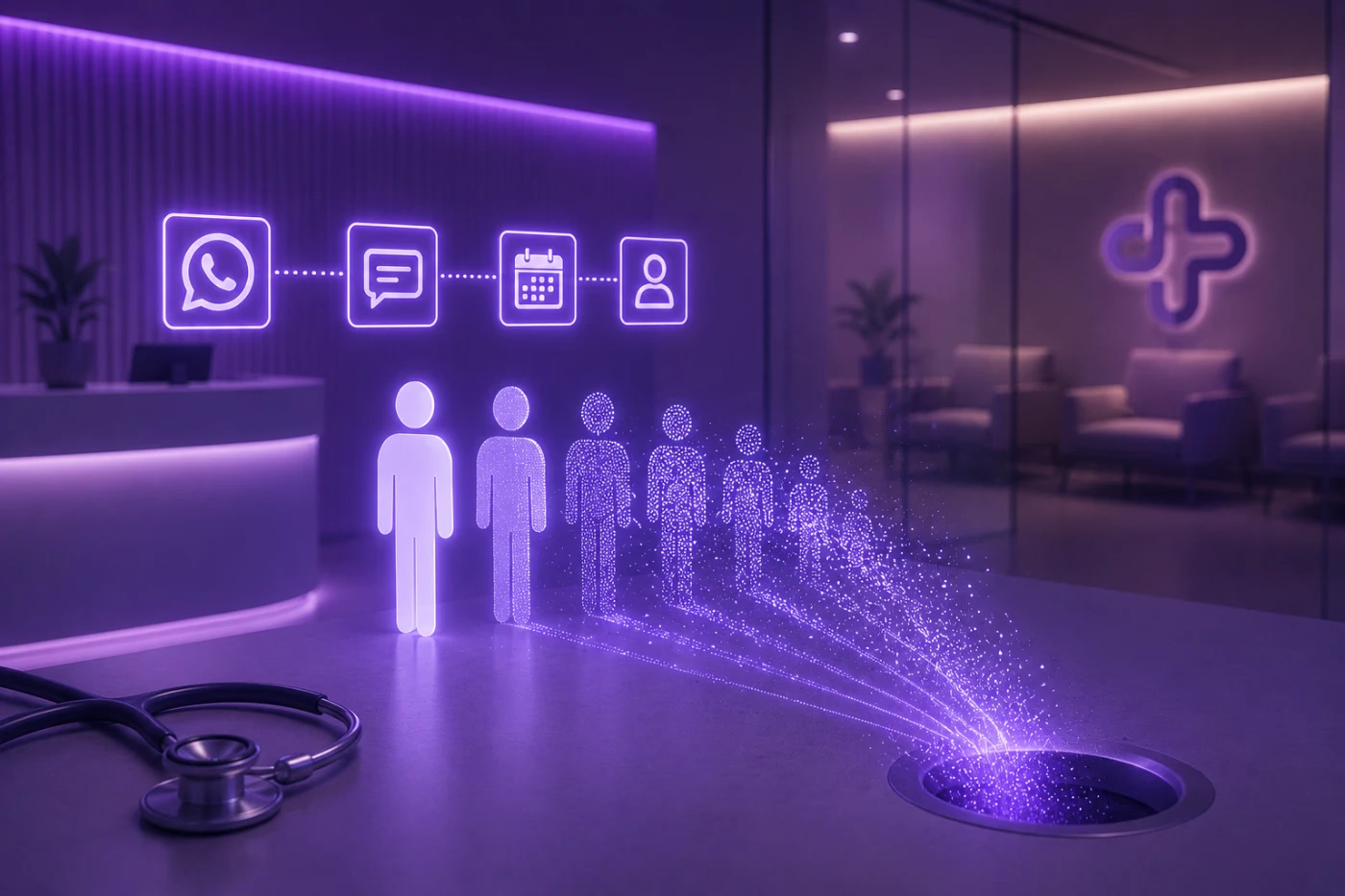
Every month, someone at your practice looks at a calendar with too many open slots and reaches the same conclusion: it’s time to raise the Meta Ads budget. It’s the automatic reflex when bookings slow down. But before that budget gets approved, there’s a harder question worth asking first: what actually happened to the inquiries that already came in this month?
In most of the practices we audit, the answer isn’t pretty. The practice is already generating enough inquiries to fill its schedule. The problem shows up afterward — in how long it takes someone to reply to an Instagram DM, in the lead who never got a second message after saying “let me think about it,” in the person who asked about a treatment on a Saturday night and got a reply the following Tuesday, long after they’d already booked somewhere else.
The Budget Increase Nobody Checks Against the Real Leak
The stat that should give every practice owner pause: 78% of leads book with the first clinic to respond, according to ScaleHaven’s 2026 aesthetic marketing research. Not the best clinic. Not the one with the strongest before-and-afters. The one that answered first. A Harvard Business Review lead-response audit found that companies replying to inbound inquiries within one hour are nearly seven times more likely to qualify that lead than those who wait longer, and in aesthetics, where shoppers make same-evening decisions and compare multiple practices at once, an hour is already too slow. Replying within five minutes instead of thirty can lift conversion three to five times, simply because the lead is still on their phone, still interested, and hasn’t been claimed by a competitor yet.
McKinsey’s research on speed-to-lead performance adds the revenue angle: companies with above-average response speed generate 50% more revenue from the same marketing spend than those running slow, manual first-touch workflows. For a practice spending $9,000 a month on Meta Ads, that gap is worth more than any tool built to close it. The US med spa industry has grown to somewhere between $17.5 billion and $21.4 billion depending on the source, expanding at a compound annual rate above 14% since 2020 — which means the leads are showing up. The real question is whether your front desk catches them before a faster competitor does.
The Math Nobody Runs Before Asking for More Budget
Picture a hundred inquiries coming into your practice this month through Instagram, your website, and text. If forty of them go cold because nobody replied fast enough, because the conversation stalled after the first message, or because nobody circled back when someone said they needed to check their schedule, buying more leads doesn’t change the outcome. You’ll keep losing that same 40%, just on a more expensive base. Patient acquisition cost in aesthetics typically runs $200 to $300, and a patient who completes a first treatment can generate close to $4,775 in lifetime value over eighteen months once repeat visits and referrals are factored in. Every inquiry that cools off from a slow reply isn’t just a missed booking — it’s that entire lifetime value walking out the door.
Conversion Starts at the First Message, Not in the Waiting Room
When a practice says “we need more patients,” it’s usually describing a symptom and mistaking it for the cause. The symptom is an under-booked schedule. The cause, in most of the practices we look at, sits in what happens in the minutes and days right after that first inquiry: who’s responsible for replying, how fast, what happens if the lead goes quiet, and who’s tracking whether a conversation that started three days ago ever got a second message.
That’s why practices with excellent providers, a beautiful space, and a strong reputation still see revenue plateau. The issue usually isn’t clinical quality. It’s that nobody has a defined commercial process: no clear owner for inbound messages, no maximum response time, no system that flags a lead sitting untouched for two days. The patient who asked about lip filler and never heard back a second time didn’t lose interest — they simply stopped waiting.
This is where a receptionist trained specifically on the practice’s own tone, treatments, and pricing changes the equation, answering Instagram, text, and web inquiries around the clock. This isn’t a generic chatbot that deflects everything to “someone will reach out soon.” It’s an agent that knows the treatment menu, gives real pricing ranges, checks actual calendar availability, and can carry a conversation through to a booked consult without a patient waiting for a front-desk moment that may not come until tomorrow.
Behind that conversation sits a CRM that automatically sorts every contact by interest level and stage: who asked about pricing but didn’t book, who booked but never confirmed, who came in for a consult but never returned for treatment. A clear conversion pipeline replaces whatever a front-desk person remembers or the spreadsheet nobody updates. And a scheduling calendar that works inside the same conversation — instead of sending the patient off to a separate booking form — removes one of the biggest points where people simply drop off.
The Follow-Up Nobody Has Time to Do
Even when an inquiry gets a fast reply, conversion often breaks down at the next step: follow-up. A patient asks a question, gets an answer, says they’ll think it over, and that’s where the conversation from the practice’s side ends. Nobody texts them again in three days. Nobody reminds them the current promotion expires this week. Nobody checks in when a downtime question goes unanswered.
This isn’t a lack of effort from the team. It’s that manual follow-up doesn’t scale. A practice with three hundred active patients and a steady stream of new inquiries can’t maintain systematic contact with every one of them through staff effort alone — the front desk is checking patients in, answering the phone, and managing the day’s schedule at the same time. Automated reactivation sequences solve exactly this blind spot: they reconnect with inactive patients, pick back up on conversations that went quiet, and send appointment reminders without anyone on staff needing to remember to do it. The result doesn’t depend on one person’s bandwidth on a busy Tuesday — it runs the same way every day.
If you want to know how many leads your practice is losing and exactly where in the conversation that loss is happening, Floix Growth can walk through that analysis with you. The starting point is your practice’s actual numbers, not industry averages.
Frequently Asked Questions
How do I know if my practice has a conversion problem instead of a lead problem? If your practice gets a steady stream of Instagram or text inquiries but the schedule still has gaps, check how long it takes someone to answer the first message and what happens to contacts who don’t book right away. That’s the clearest signal.
How fast does a lead need a reply to avoid being lost? Ideally within five minutes. Waiting past thirty minutes, most inquiries have already lost momentum or booked with a faster-responding competitor.
What does an AI receptionist actually do for a practice? It answers inquiries 24/7 across text, Instagram, and web using the practice’s own tone and treatment information, sorts leads into a CRM by stage, books consults inside the same conversation, and sends automated reminders and follow-ups without manual work.
Does this only make sense for large, multi-location practices? No. Single-location practices often see the impact faster, because the inquiries lost to slow response represent a bigger share of total monthly revenue relative to their size.
Does it replace the front-desk or patient-care team? No. It handles the first reply, the follow-up, and the scheduling consistently, and hands off to a team member when a conversation calls for it — freeing your staff to focus on the patients already in the building.
We diagnose your operation and show you exactly which module solves your bottleneck.
