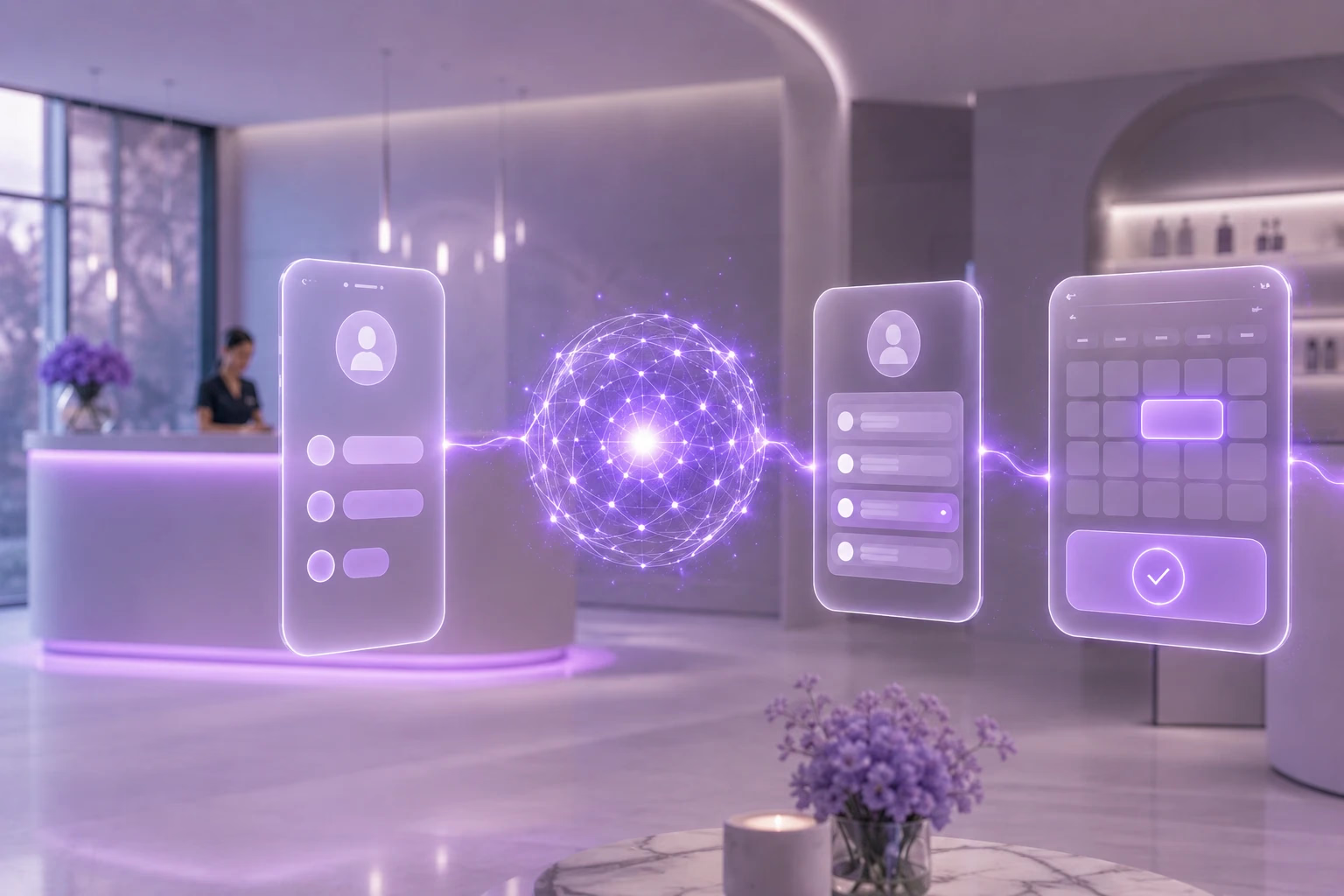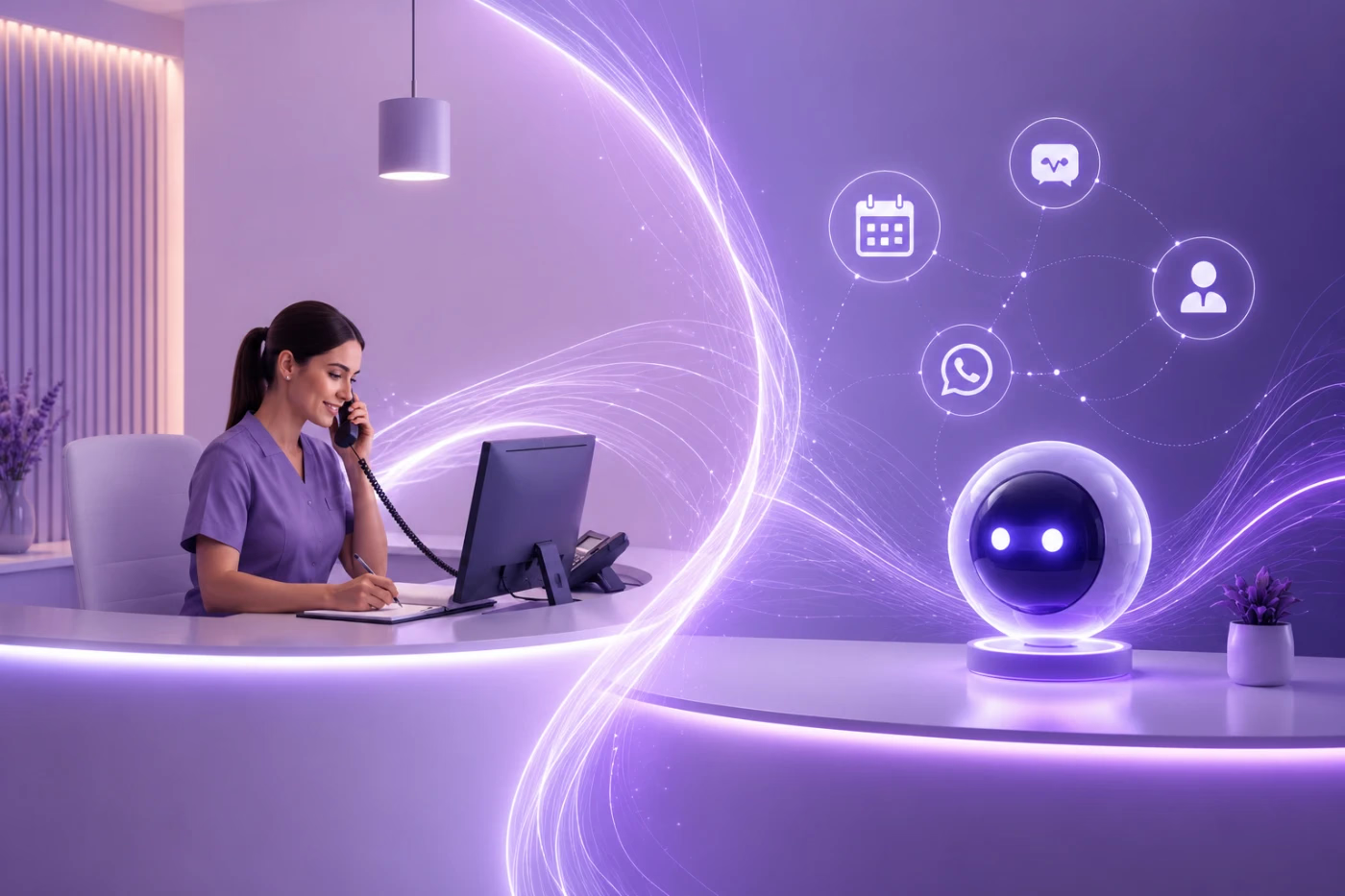
There’s a conversation that comes up constantly in clinics exploring automation: “We already tried a chatbot and it didn’t work.” When you dig into it, the pattern is always identical. The chatbot answered questions. Patients wrote in, the bot replied, and that was the end of it. Nobody booked. Nobody was qualified. Nobody followed up.
The problem wasn’t the technology. The problem was that they mistook a chatbot for something that does a fundamentally different job.
Answering Is Not the Same as Converting
A generic chatbot is built to respond. Its logic is straightforward: the user types a question, the system retrieves the most likely answer and returns it. That’s useful for handling basic questions about hours, pricing, or location. But it has a structural ceiling that no amount of configuration can raise: the chatbot waits. It waits for the user to ask. It waits for the user to decide. It waits for the user to take the initiative to book.
In the real operational world of a clinic, that model breaks down at the most critical moment in the entire process — when the prospective patient is on the fence about whether to request an appointment at all.
An MIT study cited by Harvard Business Review found that companies that contact a lead within the first five minutes are 100 times more likely to make successful contact compared to those that wait 30 minutes. The same research showed that after one hour without a meaningful response, the probability of qualifying that lead drops by more than 70%. The person who looked up the price of a treatment at 9 PM is already evaluating another clinic by morning.
The generic chatbot delivers information. The AI receptionist acts on it.
The Operational Difference Nobody Explains During the Demo
When an AI receptionist is trained specifically for a clinic, its job doesn’t begin when the patient asks a question. It begins the moment the patient reaches the channel — whether that’s WhatsApp, Instagram, or a website contact form — even if they haven’t typed a single word yet.
The first move isn’t to respond. It’s to qualify. What treatment are they interested in? Have they been a patient before? Do they have a timeframe in mind? Is there something holding them back from a previous inquiry? Those questions don’t feel like a questionnaire because they’re written in the clinic’s voice, with the clinic’s language, with the warmth or precision that clinic uses with its patients. It’s not a form dressed up as a conversation. It’s a conversation that simultaneously structures the information the team needs to follow up intelligently.
A generic chatbot has no way of knowing whether someone asking about “dermal fillers” is a cold lead doing casual research or someone ready to book this week. The AI receptionist does, because it asks the right questions and reads the responses to determine exactly where that patient is in their decision-making process.
That step — automated qualification — changes everything that comes after.
The Follow-Up a Human Receptionist Can’t Do Alone
This is where most clinics lose money without realizing it. A patient inquires, doesn’t book immediately, and falls into a gray zone. The human receptionist has five calls pending, two in-person appointments to manage, and a full schedule to keep moving. Following up with the lead who didn’t confirm gets pushed to “later.” Later, in 80% of cases, never comes.
The numbers are stark: according to 360 Clinic Consulting, 80% of leads don’t convert into patients because of poor management of the first contact. Not for lack of patient interest. For lack of timely follow-up on the clinic’s side.
An AI receptionist doesn’t have that problem because it has no schedule of its own to overwhelm it. When a lead doesn’t confirm, the system automatically generates follow-up at the exact moment the clinic defined — 24 hours later, 48 hours later, or with the specific message that fits where the previous conversation left off. If the patient mentioned they needed to check with their partner first, the follow-up doesn’t say “are you ready to book?” It picks up from that specific context.
That level of personalized follow-up, maintained at scale without any manual intervention, is what separates a trained AI tool from a chatbot that simply waits for someone to come back.
Booking Isn’t the Final Step — It’s the Step That Fails the Most
In many clinics, scheduling an appointment still requires a human to step in. The chatbot hands over a phone number. Or tells the patient “someone will reach out shortly.” Or redirects to an external form the patient has to fill out somewhere else, at some other time, with an added layer of friction.
Every extra friction point in that process is a conversion leak. Flowmatic estimates that an aesthetic clinic with a no-show rate between 12% and 19% may be losing anywhere from 23% to 45% of its real billing capacity — and that’s before counting the leads who never made it to a booking in the first place because the initial process moved too slowly.
An AI receptionist integrated with the clinic’s calendar can close that loop inside the same conversation. The qualified patient reaches the decision point, the AI offers real-time availability, the patient picks a slot, and the appointment is confirmed. No team intervention required. All of it in the clinic’s tone, following the clinic’s protocols, using the clinic’s specific information.
That’s not something a generic chatbot can do, regardless of whether there’s a “book now” button on its interface. The button leads to another system. The AI receptionist is the system.
Voice Is an Asset, Not a Detail
There’s something most chatbot demos quietly skip over: personality. A generic chatbot communicates in the register of the template it was built from. Polite, neutral, standard. You can add the clinic’s name and plug in the treatment menu prices, but the character doesn’t change. And in healthcare — especially in aesthetic medicine — the trust a patient forms through that first interaction carries enormous weight in their decision to book.
An AI receptionist trained on a specific clinic absorbs how that clinic communicates. If the clinic is warm and approachable, the AI is warm and approachable. If the positioning is premium and clinical, the AI reflects that register. If there are recurring objections that the team has learned to handle with a specific response, the AI folds that response into the conversation flow.
This training isn’t a one-time configuration that gets forgotten. It’s the factor that determines whether the patient feels like they’re talking to someone who genuinely knows the clinic — or to a bot that could be answering for any business in the category.
What the Market Is Already Proving
The global healthcare chatbot market reached $135 million in 2024 and is projected to hit $470 million by 2033, according to Global Market Statistics. That growth isn’t being driven by generic chatbots. It’s being driven by systems that can handle scheduling, follow-up, and personalization autonomously — reducing administrative load without sacrificing the quality of that first contact.
Clinics that have implemented AI-powered automated care report up to a 30% reduction in inbound calls to their front desk, because the system resolves in the digital channel what previously required a phone call, according to data from Synthtelligence. That 30% isn’t downtime. It’s recovered capacity — so the human team can focus on what AI still can’t do: in-person care, clinical rapport, and the kind of empathy that only happens face to face.
It’s Not a Smarter Chatbot. It’s a Different Role Entirely
The distinction isn’t a matter of degree. It’s a matter of kind. A smarter chatbot is still a chatbot — it responds more accurately, understands context better, but it remains reactive. It still waits for the user to lead the conversation.
An AI receptionist has a defined objective and moves toward it: turning every qualified contact into a confirmed appointment, with whatever follow-up that takes. It isn’t a support channel. It’s an automated commercial function that runs 24 hours a day, seven days a week, operating on the protocols the clinic designed and the voice the clinic built.
The right question isn’t whether a chatbot can improve your clinic’s service. The right question is whether the most fragile point in your conversion process — that window between the first message and the confirmed appointment — is being handled by something that only answers, or something that actually closes.
Frequently Asked Questions
What is the main difference between a generic chatbot and an AI receptionist for clinics? A generic chatbot answers questions reactively — it waits for the user to ask and returns whatever information is available. An AI receptionist goes further: it qualifies the patient, reads their level of intent, runs automated follow-up if they don’t confirm, and books the appointment within the same conversation — all in the clinic’s tone and following its specific protocols.
Can an AI receptionist replace a clinic’s human receptionist? Not in every respect, and that’s not the goal. The AI handles the most repetitive, high-volume work: first contact, qualification, follow-up, and scheduling. That frees the human team to focus on in-person care, complex cases, and the clinical relationship no system can replicate.
How quickly does a clinic need to respond to a lead to avoid losing them? According to an MIT study validated by Harvard Business Review data, the critical window is the first five minutes. The odds of successfully qualifying a lead are 21 times higher when contact happens within that window compared to 30 minutes later. By the one-hour mark without a meaningful response, the prospective patient’s interest has already dropped more than 70%.
Does an AI receptionist work outside business hours? Yes — and for most clinics, that’s one of its most valuable functions. The majority of inquiries about aesthetic or health treatments happen when the human team is unavailable: evenings, weekends, holidays. The AI operates continuously, ensuring no contact goes unanswered or without follow-up.
How is an AI receptionist “trained” on a clinic’s voice and information? The process involves mapping conversation flows based on the clinic’s treatments and patient profile, loading relevant information (pricing, availability, common questions, recurring objections), and incorporating the communication style the team uses day to day. The result is a system that responds the way the clinic would — not the way any generic assistant would.
We diagnose your operation and show you exactly which module solves your bottleneck.