WhatsApp is not a tool, it’s a channel
Most clinics use WhatsApp like a telephone. They reply when they can, without protocol, without follow-up, without metrics. That’s wasting the channel with the highest open rate in the world: 98% for commercial messages, compared to 20–25% for email.
That number matters because it means something very concrete: almost every potential patient who reaches out via WhatsApp reads what they’re sent back. The bottleneck isn’t attention — it’s what happens before and after that message.
At Floix, we analyzed over 2,000 WhatsApp conversations at medical and aesthetic clinics across LATAM and the US. The pattern was consistent: clinics that operate with a defined protocol convert between 3 and 5 times more leads than those that improvise.
The channel that already won — even if most clinics don’t know it yet
WhatsApp has over 3 billion monthly active users globally (Meta, 2025). In Argentina, Mexico, Brazil, and Colombia, it’s the dominant messaging app by a wide margin. Users open it multiple times a day and spend around 38 minutes inside it daily.
For the healthcare sector, that translates into something fairly simple: the potential patient isn’t going to call. They’re going to message. And if they don’t get a quick response, they’ll message the clinic next door.
In many private clinics and outpatient centers, WhatsApp has already surpassed the phone as the first point of contact. The problem is that most handle it like the phone from ten years ago: someone responds when they can, jots something down on paper, and if the patient doesn’t follow up, it’s assumed they weren’t that interested. That lead was lost without anyone recording it.
The first five minutes decide almost everything
When a patient reaches out, their level of interest is at its peak. They want to solve something right now. After those first few minutes, that interest drops consistently — not because they change their mind, but because the urgency fades and they start evaluating other options.
According to InsideSales data, companies that respond to a lead within the first five minutes are 21 times more likely to convert them than those that take more than half an hour. In a clinic context, every minute without a response is a patient Googling alternatives.
The most important data point we found: a first response time of more than 5 minutes reduces the probability of conversion by 65%. It’s not a gradual drop. It’s a threshold. And 65% of patients who message via WhatsApp expect a response within that window or less.
The gap between what patients expect and what most clinics actually deliver is enormous. That’s exactly where leads are lost — without anyone measuring it and without any record that it happened.
What works
Responding quickly with something that shows the message was read.
Not “Thank you for reaching out, we’ll be with you shortly.” That’s worse than not responding, because it confirms there’s someone on the other side who chose that generic message. A first message that mentions the patient’s name and references what they asked about generates a completely different emotional response. In healthcare, where the patient is deciding whether to trust the clinic with their wellbeing, that signal of attentiveness is worth more than any promotion.
Offering two specific time slots instead of asking when they’re available.
“When would work for you?” sounds friendly, but it transfers all the decision-making burden to the patient and opens the door to postponement. “We have availability Tuesday at 10am or Thursday at 4:30pm — which works better for you?” generates an immediate decision. This seemingly minor change can increase appointment confirmation rates by 20% to 35%.
Not pulling the patient out of the chat.
Every time a patient is asked to leave WhatsApp to fill out a form, call in, or navigate to an appointment portal, leads are lost. Clinics that send a link to Calendly or an external system can lose between 30% and 40% of interested patients at that step. Conversational scheduling — closing the appointment within the chat itself — retains two to three times more patients than flows with redirects.
Following up if they didn’t respond.
A lead that doesn’t respond isn’t a lost lead: it’s a lead that needs a second touchpoint at the right moment. The standard protocol is to send a message at 24 hours — different from the first one — that adds something rather than simply asking if they saw the previous message. Clinics that apply this follow-up recover between 15% and 25% of leads that initially didn’t respond.
Sending reminders before the appointment.
No-shows silently reduce revenue. A clinic with 4 doctors and 1,200 monthly consultations operating at a 22% no-show rate loses around 264 consultations per month. Automatic WhatsApp reminders, sent 24 hours and 2 hours before the appointment, reduce no-shows by up to 40% based on real implementations in the sector.
What doesn’t work
Obvious template messages are recognized by anyone. A text that could have been sent to anyone in any context doesn’t build trust — it creates the feeling that nobody read what the patient wrote.
Asking patients to call to confirm is pure friction. If someone chose WhatsApp, they already made a decision about how they want to communicate. Asking them to switch channels is ignoring that preference. Most don’t call — they abandon.
Using WhatsApp only reactively, waiting for the patient to write first, is leaving money on the table. The channel works just as well for reactivating patients who haven’t visited in months, for reminding about preventive check-ups, or for following up after a consultation. Clinics that use it only as an inbox are leveraging less than 30% of its real potential.
The 3-message protocol
With the right system, three well-written messages sent at the right moment convert over 40% of leads that come in through WhatsApp.
The first has to go out within five minutes. Not to close the appointment, but to establish that there’s someone on the other side who read what the patient wrote. It includes their name, a direct reference to their inquiry, and a proposed appointment time or a question that moves the conversation forward.
The second comes in if there’s no response in the following two to four hours. It proposes two specific time slots, maintains a warm tone without pressure, and adds something the first message didn’t say: a reason to act today, relevant information about the treatment, or simply the day’s availability.
The third arrives at 24 hours. Short, no pressure: “We’re available whenever you’re ready to continue. We’ll be here.” It keeps the door open without overwhelming. Many conversions happen after this message, days later, when the patient comes back on their own because the clinic didn’t disappear.
The key isn’t the number of messages but the cadence. Sent all at once or with the wrong tone, they have the opposite effect.
Scaling without losing the human touch
The most common fear we hear is: “If I automate, I’ll lose what makes us different.”
It’s an understandable fear, but it starts from a wrong premise. Well-implemented automation doesn’t replace the human touch — it frees up the team to actually deliver it. It takes out of reception’s hands the tasks that don’t require judgment — confirming appointments, sending reminders, answering the same five questions over and over — and gives them back time for the conversations that actually do.
A medical tourism clinic that implemented WhatsApp automation increased its consultation volume by 70%, reduced first response time to seconds, and its team stopped being overwhelmed by volume. It didn’t disappear — it refocused on what matters.
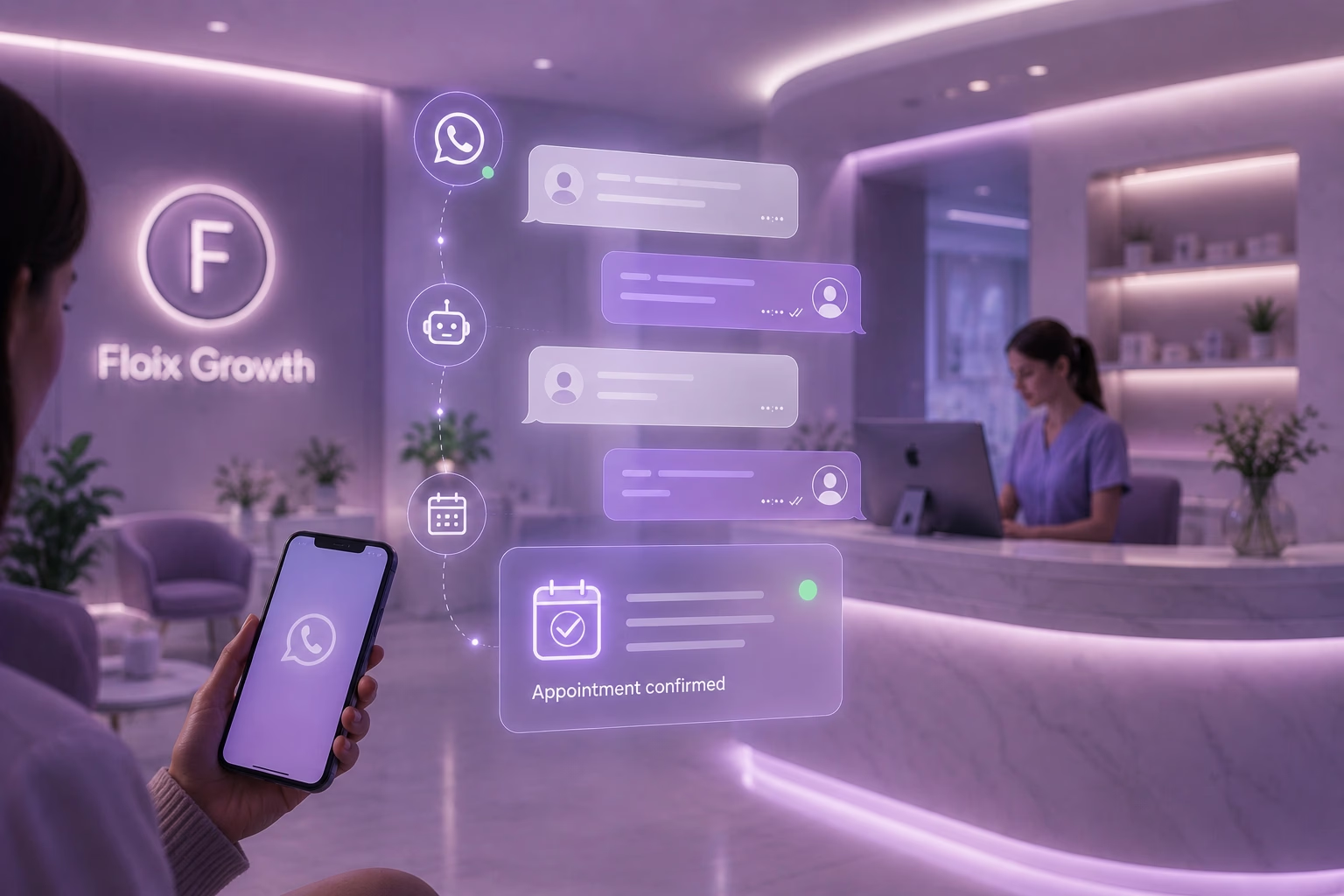
The systems that work best combine three pieces: an automatic immediate response for first contact available 24 hours a day, a qualification layer that identifies which inquiries require urgent human attention, and a smooth handoff to the team when the case warrants it — with the full conversation context already available.
What to measure to know if the channel is working
Most clinics don’t measure any of this, which is why they don’t know how much they’re losing.
First response time is the most important number. If it averages more than 5 minutes, there’s a conversion problem that no advertising budget will fix. The lead-to-appointment conversion rate should be between 38% and 65% for clinics working with an active protocol. No-shows, with automatic reminders, should be below 15%. And the follow-up response rate tells you exactly how many recoverable leads are being let go without a second touchpoint.
Frequently asked questions about WhatsApp for clinics
Is it legal to use WhatsApp to contact patients? Yes, with prior patient consent. In Argentina, the Personal Data Protection Law 25.326 applies; in Mexico, the Federal Law on Protection of Personal Data Held by Private Parties. The WhatsApp Business API requires explicit opt-in before sending any commercial message.
What’s the difference between WhatsApp Business and the API? WhatsApp Business is the free app designed for small businesses that manage conversations manually. The API is the version for automation and scale: it allows integration with CRMs, chatbots, and management systems, and enables automated flows that the app can’t do. For clinics receiving more than 20 or 30 messages per day, the API is what makes sense.
How long does implementation take? A basic flow — automatic response, conversational scheduling, and appointment reminders — can be operational in two to four weeks, depending on the integrations needed with the clinic’s management system.
Can it be connected to the scheduling software we already use? In most cases, yes. The WhatsApp Business API has integrations available with the main clinic management software on the market, including ClinicCloud, Doctoralia, and Gesden, among others.
What if the message volume is too high for a human to respond within 5 minutes? Clinics that implement AI assistants on WhatsApp reduce their first response time by an average of 95% — from minutes to seconds — with 24-hour availability. The AI handles the first contact and qualification; the human team steps in for cases that actually require it.
The difference between a clinic that converts 10% of its leads and one that converts 40% is almost never about the advertising budget or the quality of treatments. It’s about what happens after the patient sends that first message.
Want to implement a WhatsApp conversion system at your clinic? At Floix we work with medical and aesthetic clinics in LATAM and the US. Contact us.
We diagnose your operation and show you exactly which module solves your bottleneck.