Most clinics are dealing with the same problem wearing different faces. Sometimes it looks like a marketing problem because leads come in but don’t convert. Sometimes it looks like a scheduling problem because there are gaps in the calendar that nobody fills. Other times it shows up as a reputation problem because the Google reviews don’t reflect what the team knows it does well. In every one of those cases, the real diagnosis is the same: there is no system connecting those points to each other and keeping them running continuously, without depending on someone to remember to do it.
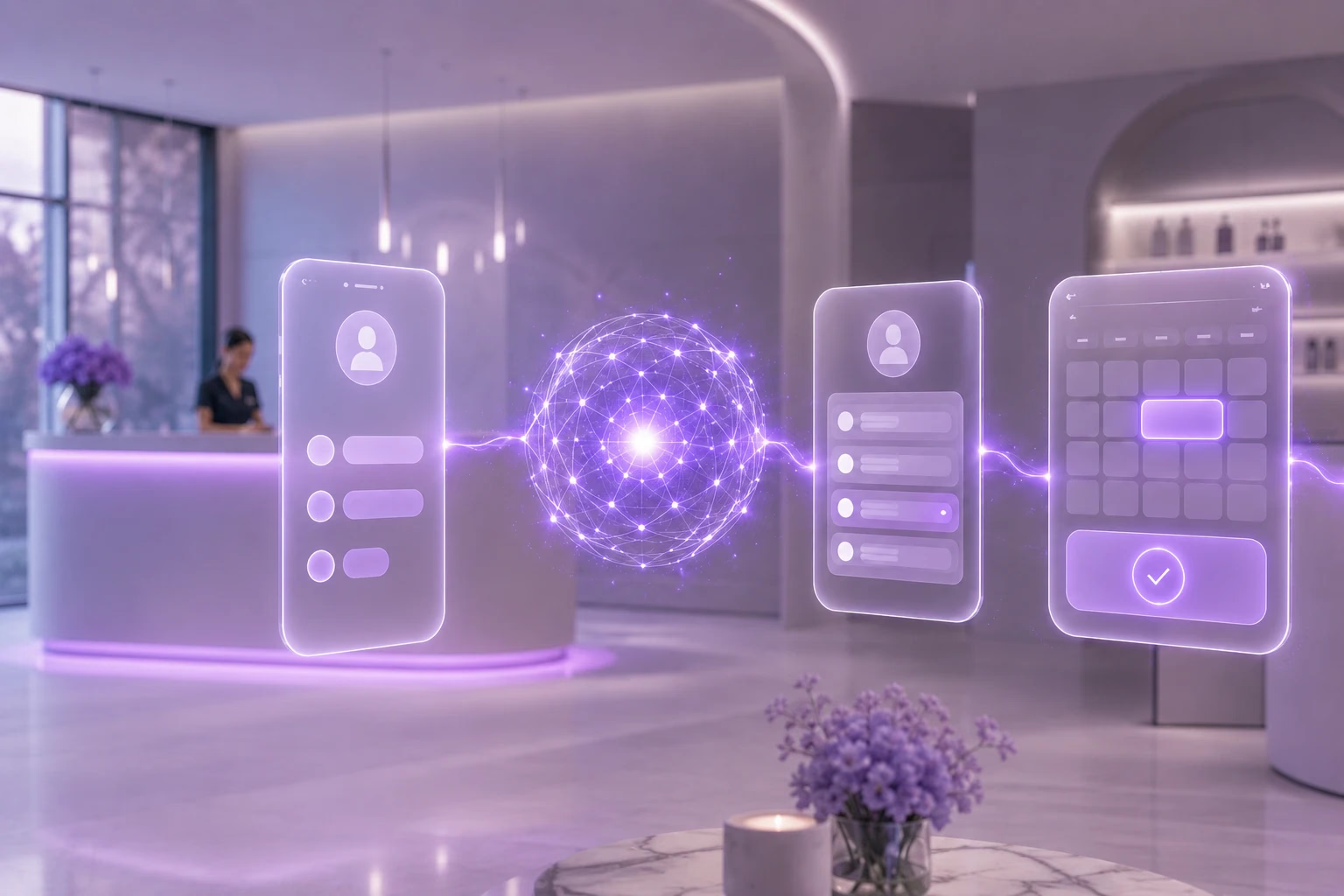
A conversion system for clinics isn’t a single tool or a standalone application. It’s the complete architecture that covers the patient journey from first contact through long-term retention, automating every stage where manual effort breaks down — by volume, by time, or by inconsistency.
The Problem Isn’t Demand. It’s What Happens After Demand Arrives
Many clinics invest significant budget in digital advertising, search engine visibility, or social media presence, and the results disappoint. Not because the channel doesn’t work, but because the intake system waiting on the other side isn’t equipped to turn that traffic into confirmed appointments.
According to 360 Clinic Consulting, 80% of leads never become patients due to poor management of the first contact — and that figure isn’t about low-quality leads, it’s about real opportunities lost for lack of speed, follow-up, or both. An MIT study validated by Harvard Business Review data found that contacting a lead within the first five minutes produces a conversion probability 21 times higher than waiting 30 minutes, and that once an hour passes without a meaningful response, the prospective patient’s interest has already dropped by more than 70%.
The system exists precisely so those five minutes always happen — not only when someone on the team happens to be available.
The AI Receptionist: The First Link That Doesn’t Break
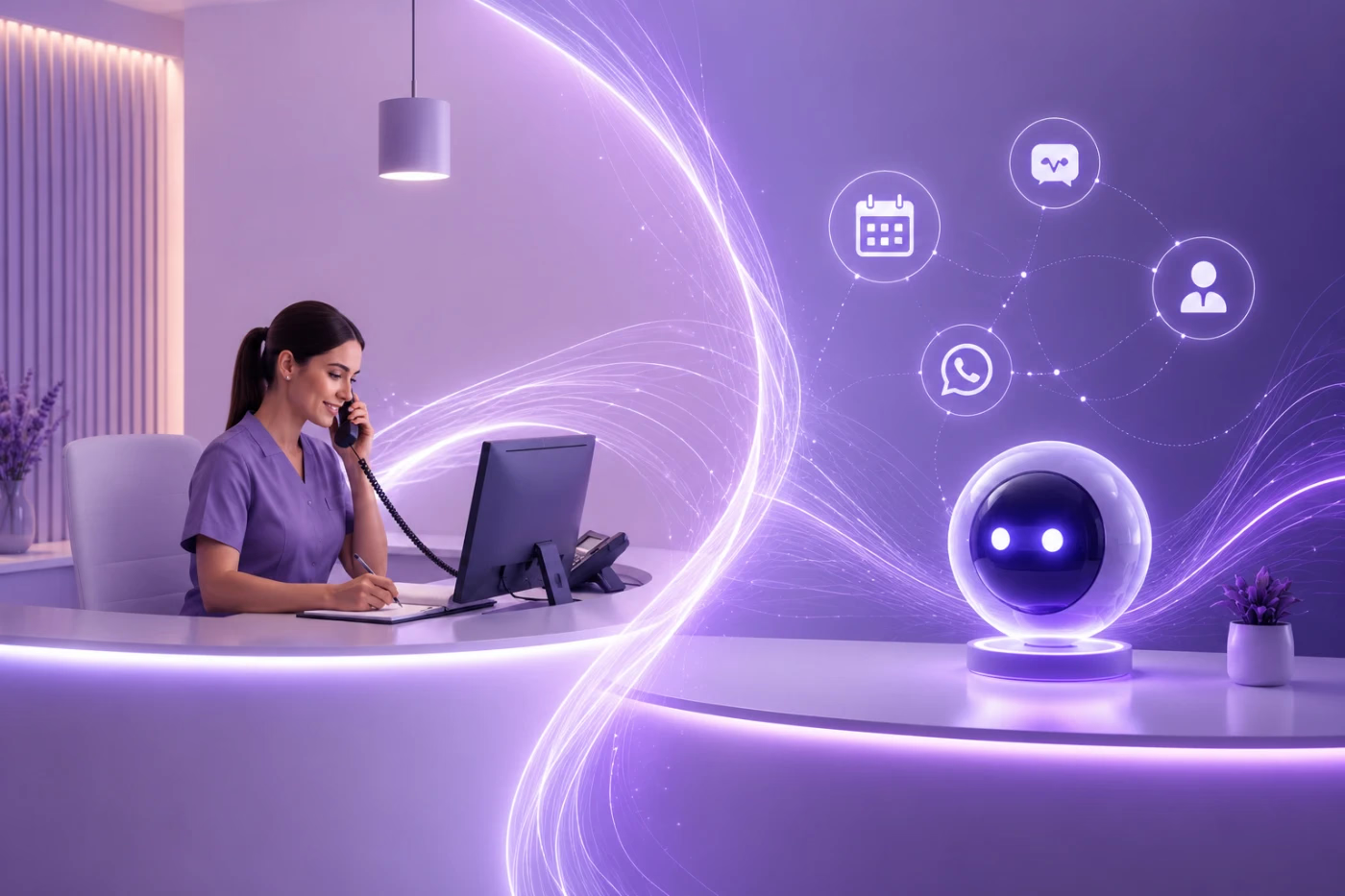
The entry point of the system is an AI receptionist trained on the clinic’s specific information, tone, and protocols. It isn’t a generic chatbot pulling answers from a preset template — it’s a conversational agent that qualifies the patient from the very first message, identifies which treatment they’re interested in, detects whether they’ve been a patient before, picks up on specific objections or hesitations, and guides the conversation toward a confirmed appointment, all within the same channel where the patient reached out, whether that’s WhatsApp, Instagram, or a website contact form.
The operational difference is substantial. A chatbot waits for the patient to lead the conversation. The AI receptionist leads it with a clear objective: that this person ends the interaction with an appointment booked or, if they’re not ready for that yet, with a follow-up scheduled for the moment they are.
This layer of the system runs 24 hours a day, seven days a week, including nights, weekends, and holidays — which are precisely the moments when the most inquiries arrive and the human team has the least capacity to respond.
Automated Follow-Up: No Lead Gets Left Behind
Follow-up is the process that costs clinics the most money without anyone noticing. A prospective patient inquires, doesn’t confirm right away, and drifts into a gray zone that nobody has time to resolve manually once the day’s schedule is already in motion. The human team doesn’t fail here out of negligence — it fails out of capacity: every person at the front desk has a limit to how many parallel conversations they can sustain without something slipping through.
The conversion system resolves this with automated follow-up flows that activate whenever a lead doesn’t confirm within a defined window. Those messages aren’t generic and don’t read like automated reminders — they pick up the specific context of the previous conversation. If the patient said they wanted to think it over, the follow-up references that. If a question about pricing was left open, the message comes back to it. If they expressed a specific concern about a procedure, the follow-up addresses it before circling back to the invitation to book.
That level of personalization, sustained consistently at scale across dozens or hundreds of simultaneous leads, is what transforms follow-up from a forgotten task into an active commercial function that runs without any manual input.
Patient Reactivation: The Database Worth More Than Anyone Realizes
Every clinic that’s been operating for more than a year has something it rarely takes systematic advantage of: a list of patients who at some point chose the practice, had a positive experience, and stopped coming back. Not necessarily because they went somewhere else, but because nobody reached out when the timing was right.
Retaining an existing patient costs between five and seven times less than acquiring a new one, according to data from App Dental and CooperVision — and yet most clinics pour nearly all of their budget into new patient acquisition while their existing patient base sits dormant. A well-executed reactivation campaign can generate immediate revenue without any advertising spend, simply because it targets people who already know the clinic and, in many cases, just needed to be reminded at the right moment.
The conversion system includes reactivation flows that activate automatically based on how long it’s been since a patient’s last visit, what type of treatment they received, and the natural cycle of that service. A patient who had a filler treatment six months ago may be ready for a maintenance session now. A patient with a pending dental consultation who hasn’t returned in three months may simply not have come back because nothing prompted them to. That gap doesn’t mean they’re lost — it means no one reached out at the right time.
Appointment Reminders: The Most Direct Way to Recover Revenue
No-shows are one of the most concrete and least solved operational problems in clinical practice. According to data published in Elsevier, between 12% and 19% of scheduled appointments go unattended, and Flowmatic estimates that rate can represent between 23% and 45% of unrealized billing capacity in aesthetic and health clinics. Those aren’t abstract percentages — they represent professional time, equipment, and space that the clinic pays for whether or not a patient walks in.
Automated appointment reminders bring that number down directly and without adding any burden to the team. The system sends confirmation messages at the intervals the clinic defines — 48 hours before, 24 hours before, the morning of the appointment — through the channel patients are most likely to open and respond to, which across most Latin American and Southern European markets is WhatsApp, with open rates above 98%.
What separates these reminders from generic notifications is that they include the option to confirm, cancel, or reschedule right within the conversation. If a patient can’t make it, that information arrives early enough to reassign the slot to someone on the waitlist. The system turns a potential absence into a rescheduled appointment rather than a lost revenue slot.
Google Review Management: The Most Underestimated Asset a Clinic Has
According to Updent data for the healthcare market in 2026, 78% of patients read reviews before choosing where to receive care, consulting an average of seven reviews per clinic before deciding to call — and 68% trust those online reviews as much as a personal recommendation. In that environment, a clinic’s Google rating isn’t an internal satisfaction metric; it’s an active commercial asset that directly determines how many new patients choose that clinic over the next one on the map.
The operational challenge is well known: satisfied patients rarely leave a review unprompted, while dissatisfied ones have a much stronger emotional motivation to write. That natural asymmetry produces ratings that don’t reflect actual service quality and erode local Google positioning over time in ways that compound quietly.
The conversion system incorporates a reputation management flow that, at the close of every appointment confirmed as successful, sends the patient a personalized invitation to share their experience. That message arrives at the peak moment of satisfaction — immediately after the visit, when the experience is fresh and the willingness to rate it positively is at its highest. It’s directed only toward patients whose interaction with the system signals a positive experience, so the reviews that land on Google genuinely reflect the quality of the service, build the clinic’s rating consistently over time, and improve local search visibility as that rating grows.
Google rewards clinics with frequent, recent reviews and active responses with higher placement in local results, according to Google Search Central technical documentation — which creates a positive feedback loop: a stronger reputation generates more visibility, more visibility brings in more new patients, and more new patients create more opportunities for authentic reviews.
Why This Is a System and Not a Stack of Tools
What makes these components work isn’t any one of them in isolation — it’s the integration between them. The AI receptionist that qualifies a lead records the information that makes follow-up intelligent. The follow-up triggers reactivation flows when the timing is right. The appointment reminders feed into the reputation management flow once an appointment is confirmed as successful. The entire cycle runs on the same data, in the same voice, under the same clinic protocols.
A clinic that has a chatbot, a separate appointment reminder tool, and someone who occasionally asks for reviews doesn’t have a conversion system — it has disconnected tools that depend on someone remembering to use them in the right order. The difference isn’t in the technology available; it’s in whether those pieces work together automatically or each one operates as its own island.
The conversion system does one thing no individual tool can: it guarantees that every contact who reaches the clinic travels the full path to conversion, regardless of the time of day, the volume of the week, or how stretched the team happens to be.
A clinic that converts consistently isn’t the one with the biggest advertising budget or the one that works the longest hours. It’s the one with the system that works when the team can’t.
Frequently Asked Questions
What exactly is a conversion system for clinics? It’s the automated architecture that manages the complete patient journey from first contact through long-term retention. It includes an AI receptionist that qualifies and books, follow-up flows for leads who don’t confirm, reactivation campaigns for inactive patients, automated appointment reminders, and Google review management — all operating in an integrated, continuous loop.
What kind of real impact does it have on a clinic’s revenue? The impact is direct and measurable. Appointment reminders reduce no-shows, which according to Elsevier account for 12% to 19% of all scheduled visits. Follow-up flows recover leads that would otherwise be lost, given that 80% don’t convert due to poor management of the first contact. Patient reactivation generates revenue without any advertising spend by engaging a base that already knows and trusted the clinic.
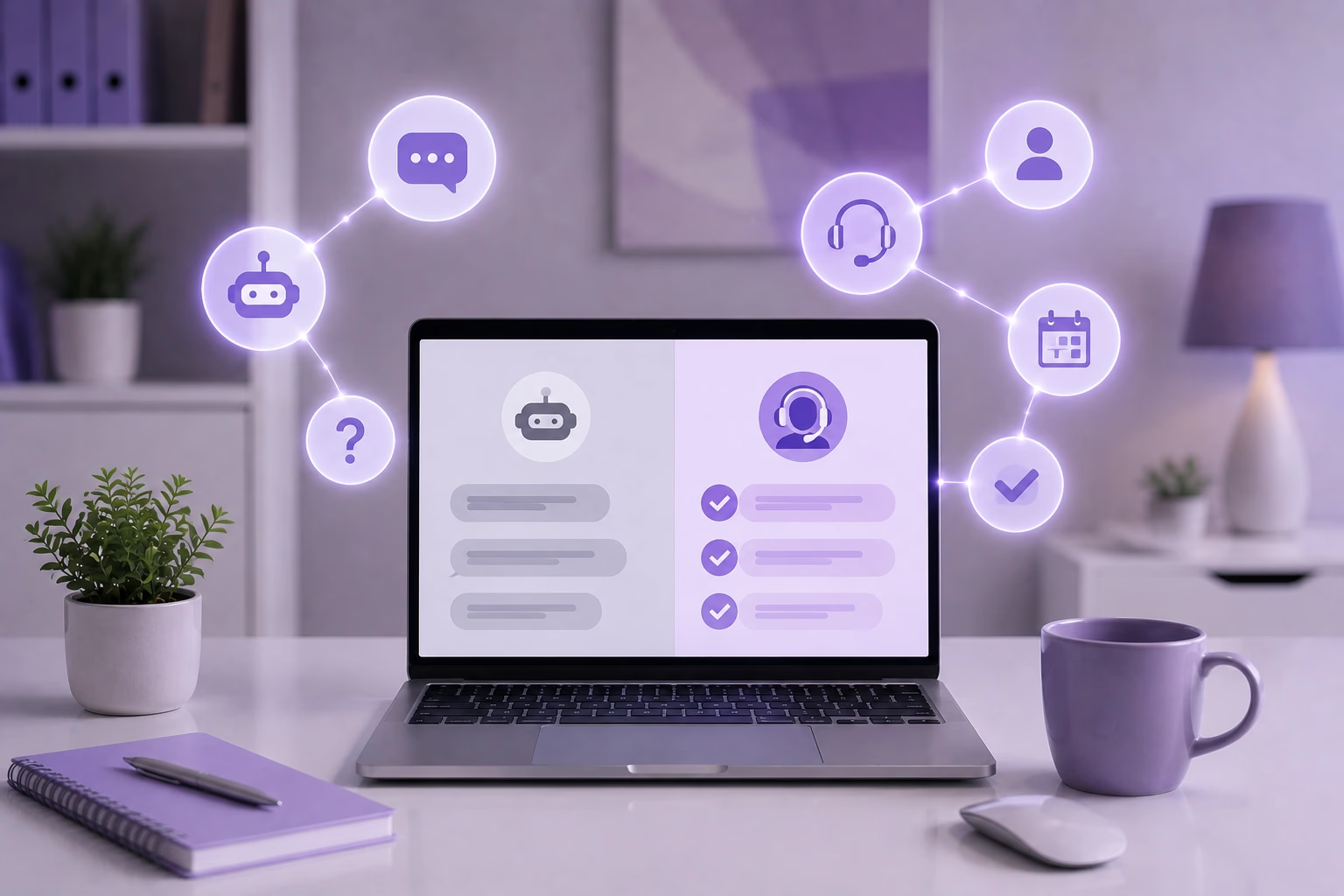
Can the system replace the clinic’s human team? That’s not the goal. The system automates the highest-volume, highest-risk-of-being-forgotten tasks — first contact, follow-up, reminders, and review requests — so the human team can focus on what can’t be automated: in-person clinical care and the patient relationship.
How does the Google review management piece work without violating platform policies? The system directs review requests only to patients whose interaction indicates a positive experience, and it does so at the moment of highest satisfaction — right after their appointment. It doesn’t offer incentives or apply pressure. The result is genuine reviews from real patients that improve the clinic’s rating organically and consistently, without any of the practices Google penalizes.
What size clinic needs a conversion system? Any clinic with a regular flow of incoming inquiries benefits from this system, because lead loss from inadequate follow-up and revenue loss from no-shows happen regardless of clinic size. The system is especially critical for clinics with one or two people handling reception, where the ceiling on manual management capacity is low and the cost of anything falling through is high.
We diagnose your operation and show you exactly which module solves your bottleneck.