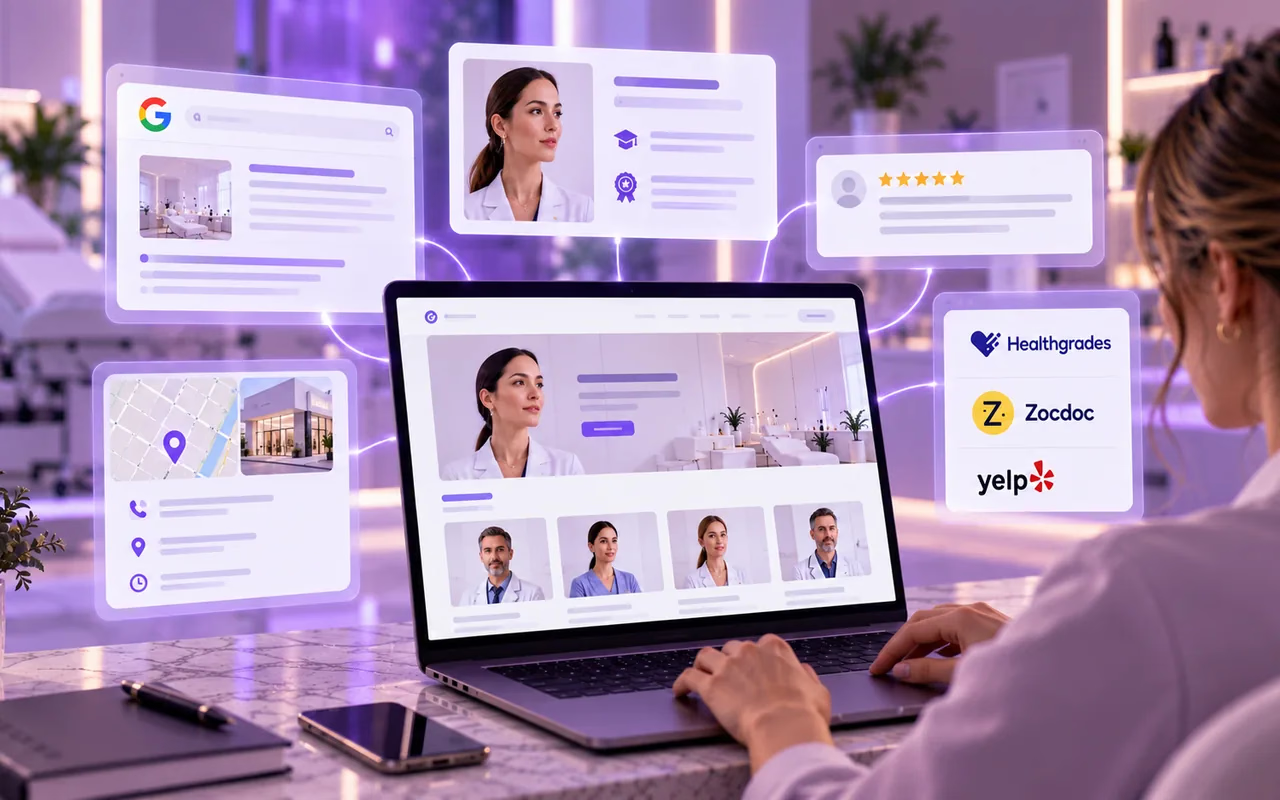
One page per service: why your clinic shouldn't list every treatment on a single page
Someone searching "dental implants in Houston" wants to land on a page about implants, not a list of twenty treatments. Giving each service its own page helps Google, AI assistants, and patients.
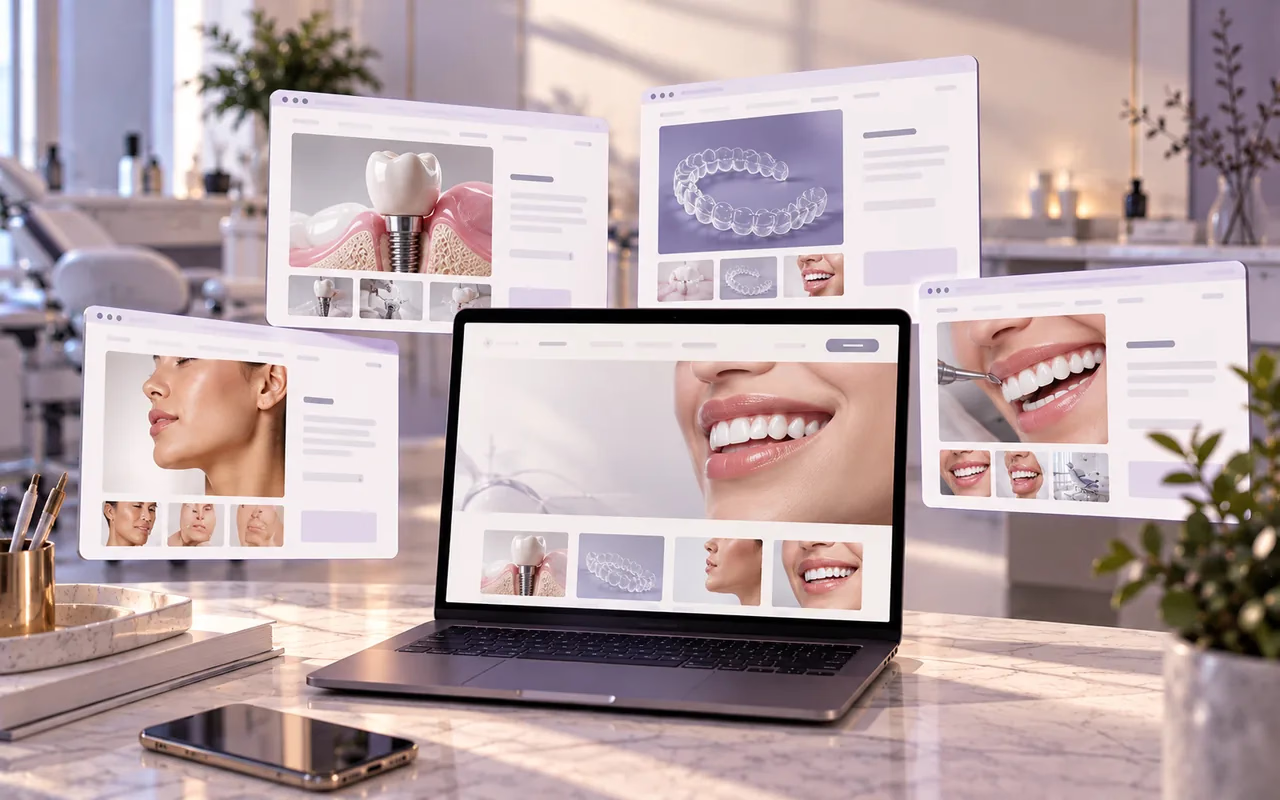
Quick answer
Each important service your clinic offers deserves its own page, with its own URL, a clear title, and answers to patients' real questions. A single page listing every treatment gives Google and AI very little to understand what you do well, and makes patients hunt for what they came for.
Key takeaways
- People search for specific treatments ("teeth whitening," "sports physical therapy"), and Google tries to send them to the page that best answers that specific search.
- A page per service lets you explain what it is, who it's for, how the process works, and what patients usually ask, which is impossible in a list.
- That specific content is also what AI assistants use to understand and recommend a clinic for a particular treatment.
- Each page needs its own button to book an appointment: a patient who arrives through a service page already knows what they want.
In this article
Patients search for treatments, not clinics in general
Very few patients search for just “dental clinic.” They search for “dental implants,” “clear aligners for adults,” or “teeth cleaning cost.” Each of those searches has a specific intent, and Google tries to show the page that best answers it, not the clinic that mentions the most services.
If your site has a single “Services” page with twenty treatments in a list, none of them actually has a page that explains it. To Google, that page covers a little of everything and nothing in depth.
What your clinic gains with a page per service
| For whom | What changes |
|---|---|
| One URL and title per treatment, easier to match to each search | |
| AI | Specific information to cite when someone asks about that treatment |
| The patient | Lands right on what they were looking for, with their questions answered |
| Your clinic | Inquiries from patients who already know which service they need |
The same goes for assistants like ChatGPT or Perplexity: when someone asks which clinic they’d recommend for a specific treatment, they look for sources that cover that treatment clearly. A dedicated page is exactly that.
What a good service page needs
- A clear title with the treatment’s name. The one a patient would use, not your internal technical term.[1]
- What it is and who it’s for. A simple explanation, no jargon, and which kind of patient it suits.
- How the process works. The steps, how long it usually takes, and what to expect afterward. This is what reassures someone who’s still deciding.
- Who performs it. The provider at your clinic in charge, with their credentials. It’s a trust signal for both patients and Google.[2]
- Real frequently asked questions. The ones your team hears on the phone every week.
- A button to book. Visible, without having to go back to the home page to find it.
What to avoid
The most common mistake is creating lots of pages by copying the same text and only changing the service name. Google notices and gives it no value, and patients quickly see you’re not telling them anything new. It’s better to start with the services that matter most to you, explained well, and add pages as you have something useful to say about each one.
You also don’t need to invent content to fill space. A service page doesn’t have to be long. It has to answer what the patient wants to know before booking.[2]
Service pages on Floix Web
Every Floix Web plan includes individual service pages: at least 3 on Essential, 6 on Professional, and unlimited on Authority. If you need more on Essential or Professional, you can add extra service pages for $12/month each. We build them from the information you give us, and you review them before they go live.
If you’d like help deciding which services deserve their own page, book a free call or review the plans.
Frequently asked questions
01How many service pages does my clinic need?
One for each service you want patients to find on its own and that's a meaningful part of your work. You don't need a page for every minor variation: six complete pages beat twenty nearly empty ones.
02What should each service page include?
What the treatment is, who it is for, how the process works step by step, what to expect afterward, who performs it at your clinic, frequently asked questions, and a clear button to book. If you publish prices, keep them up to date.
03Can I reuse the same text across pages and just change the service name?
It isn't recommended. Google values useful, original content, and near-identical pages don't give patients anything new. Each page should answer the questions specific to that treatment.
References