E-E-A-T: why Google holds health sites to a higher standard (and how your clinic can show it)
Google treats health content differently from everything else — for good reason. Here's how your site can show the real experience your clinic has.
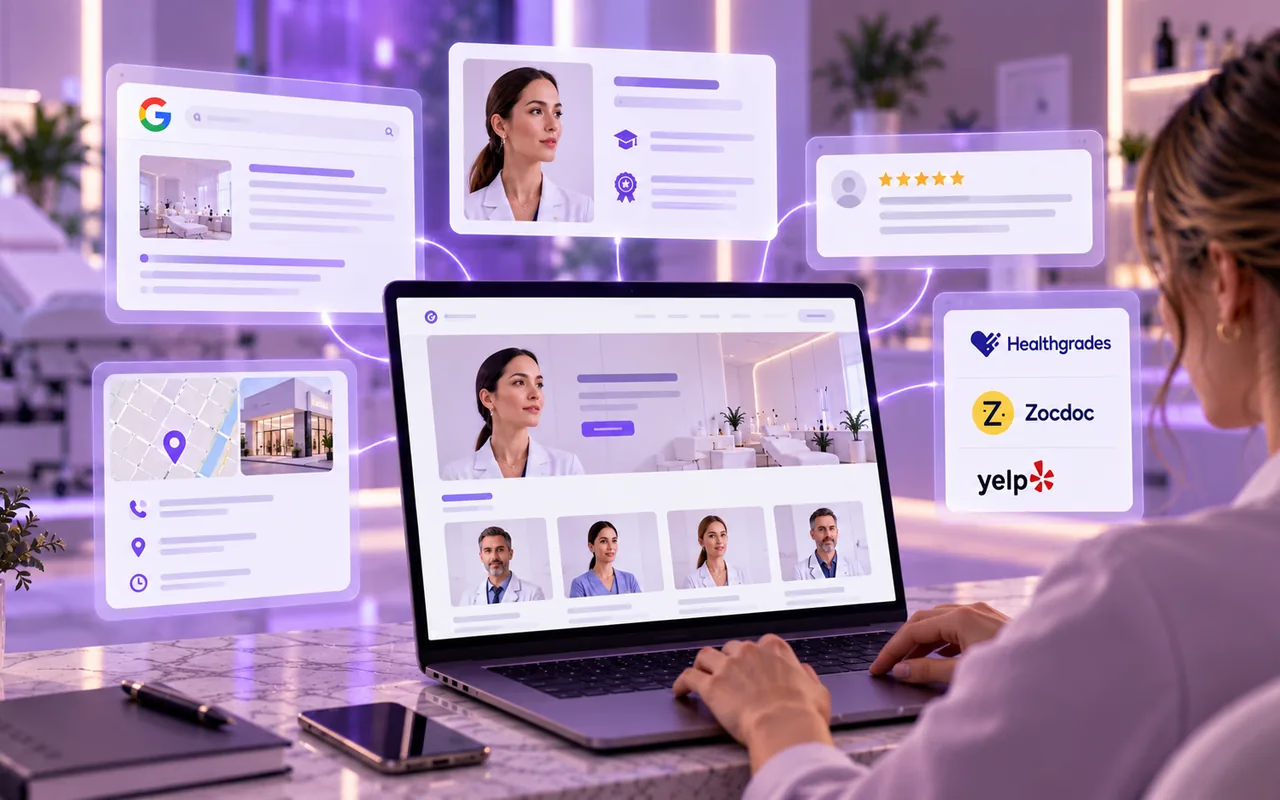
Quick answer
E-E-A-T (Experience, Expertise, Authoritativeness, Trustworthiness) is the standard Google uses to evaluate content that can affect a person's health, money, or safety — a category Google calls YMYL (Your Money or Your Life). A clinic site falls squarely into that category, so Google — and the generative AI that learns from the same signals — reviews it against a higher bar than an average blog.
Key takeaways
- Google explicitly states its systems give "even more weight" to E-E-A-T on YMYL content — and health is the most direct example of that category.
- The "Experience" part is the easiest to overlook: it's not enough to know the subject, you have to show the person writing actually lived or practices it.
- Real, verifiable authorship — a name, credentials, a real bio for the professional — is the most concrete and easiest signal to add today.
- The same trust Google asks for is what a generative AI system needs in order to cite your clinic in a health-related answer without risking an incorrect recommendation.
In this article
Why health plays by different rules
Not all content on the internet gets evaluated the same way. A poorly written recipe, at worst, ruins a dinner. A health page with incorrect information can lead someone to make a bad decision about their own body. Google explicitly recognizes that difference: it defines a category called YMYL (“Your Money or Your Life”) for any content that can affect a person’s health, finances, or safety, and applies a higher standard there.[1]
The standard it measures that against is called E-E-A-T: Experience, Expertise, Authoritativeness, and Trustworthiness. Google says so directly in its own guidance: it gives “even more weight” to these signals when the topic is YMYL — and a clinic, by definition, is always writing about health.[1]
The four letters, explained for a clinic
| Signal | What it means | How a clinic site shows it |
|---|---|---|
| Experience | Having actually lived or practiced what’s described | A real, named professional who actually sees patients at that clinic |
| Expertise | Technical knowledge of the subject | Credentials, specialty, years of practice |
| Authoritativeness | Being recognized as a reference on the topic | External mentions, real reviews, consistent presence across medical directories |
| Trustworthiness | Information being accurate and verifiable | Real contact details, a verifiable address, content without exaggerated claims |
Most clinic sites fail the first row of this table before anything else: unsigned content, written in a generic third person, with no indication of who the professional behind it actually is.
Why this matters to generative AI too
When a generative AI system puts together an answer about a health topic, it faces the same problem Google does: recommending something incorrect has real consequences. That’s why it tends to prefer citing sources that show clear signals of real authorship and trustworthiness — for the same reason Google weighs them more heavily on YMYL, not because it’s a different rule, but because both systems are solving the same problem: how safe is it to trust this source on a sensitive topic.
A site with no clear authorship doesn’t just lose ranking on Google — it’s also less likely to be the source an AI chooses to cite.
Three concrete things to start today
- Add a real name and a short bio for each professional on the service pages where it’s relevant, not just on a generic “team” page.
- Be specific, not generic — mention the actual specialty, years of practice, real training, instead of phrases like “highly qualified professionals” with no name behind them.
- Keep information verifiable and consistent — the same address, the same professional’s name, across your site and every directory you appear on (see our guide on medical directories and local citations).
How we put this into practice at Floix Web
At Floix Web, the Professional plan includes 6 service pages and 3 provider pages, and the Authority plan adds a page for every team member and unlimited service pages. That way each professional has their name, specialty, and bio in a place of their own, instead of unsigned content. You provide the real information; we organize it on your site.
If you’d like to see how that applies to your clinic, book a free call or review the plans.
Frequently asked questions
01What exactly does YMYL mean?
"Your Money or Your Life" — the category of content Google holds to a higher standard because a mistake can affect a person's health, finances, or safety. Any medical page, including a clinic's, falls into this category.
02Can my clinic improve this without being a globally recognized medical authority?
Yes. E-E-A-T doesn't require fame — it requires that the information be accurate and that it's clear who stands behind it: the real name of the professional, their specialty, and confirmation that person actually works at your clinic.
03Does this replace technical SEO or structured data?
No, it complements them. Structured data tells Google who wrote something; E-E-A-T is the standard Google (and AI) use to decide whether to trust that person.
04Where do I start if my site has none of this today?
With the simplest step: add a real name and bio for each professional on the pages where it belongs, instead of leaving the content unsigned.
References