How to respond to negative reviews without hurting your reputation
A bad review doesn't sink your reputation — a bad response does. The guide to replying without the mistakes most clinics make.
Quick answer
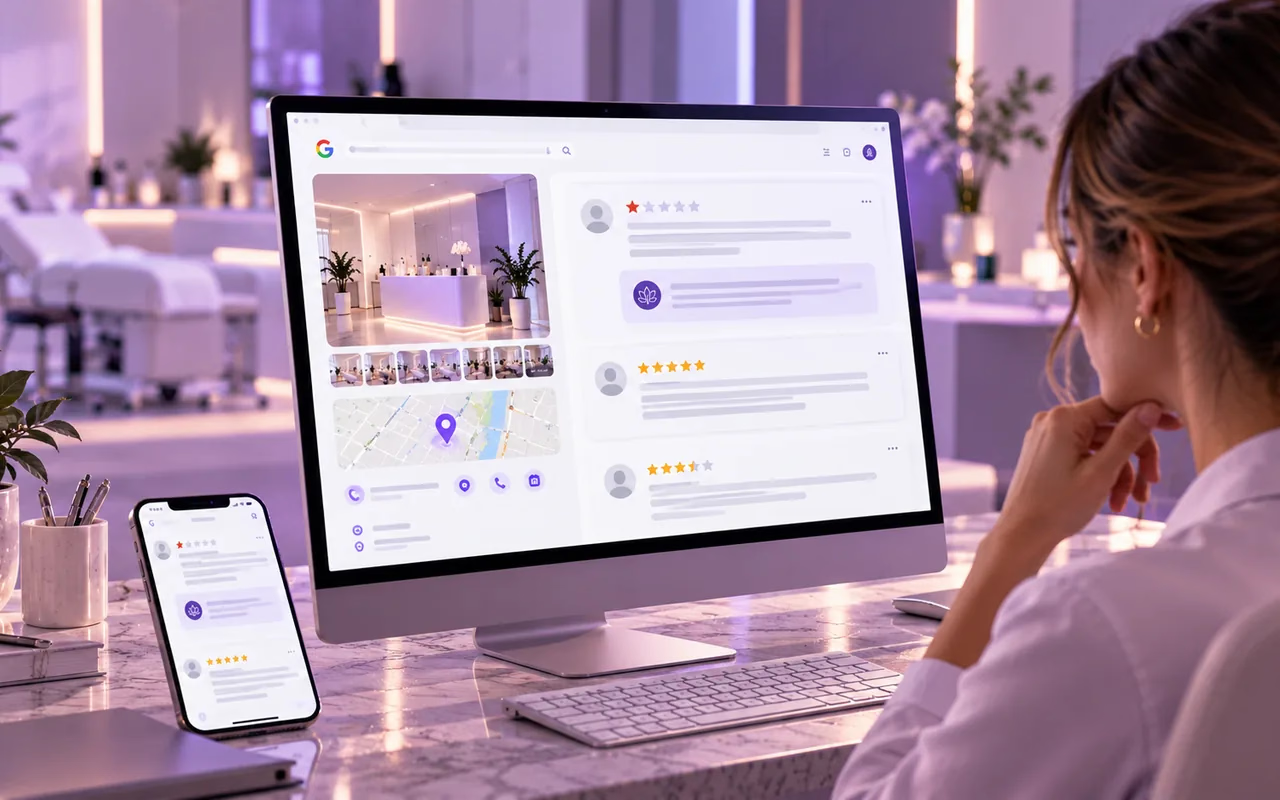
A one-star review doesn't scare patients off by itself — what does is seeing that the clinic never replied, or replied defensively. The rule is simple: acknowledge, don't argue in public, and offer to sort it out through another channel. Whoever reads your reply is the next patient, not the one who wrote the review.
Key takeaways
- Prospective patients read a clinic's replies just as much as the reviews themselves.
- Replying quickly and without getting defensive matters more than 'winning' the argument.
- Never share medical or personal details about a patient in a public reply.
- Only a minority of negative reviews violate Google's policies and can be removed — most just need a reply, not a fight.
In this article
Why the reply matters more than the review
No clinic gets five stars every single time, and any patient comparing options on Google Maps knows that. What they notice is how the clinic reacted when something went wrong: a thoughtful reply turns a complaint into proof that grievances get handled there, not ignored.
That’s why an unanswered negative review counts against you more than a well-handled one. The patient deciding today didn’t live through the problem — they’re only reading how it was managed. A bad review also carries less weight among many recent, positive ones, which is where a system for asking for reviews after every appointment helps.
The 3 mistakes that make a negative review worse
- Arguing in public. Laying out your side point by point in the reply turns a private complaint into an open debate anyone can read later.
- Copy-pasting the same generic response. “Thanks for your feedback, we’ll take it into account,” with nothing specific, reads like nobody actually read the review.
- Sharing patient details. Mentioning a diagnosis, treatment, or any identifying detail in a public reply isn’t just poor taste — it’s a medical privacy leak.[1]
How to respond in 4 steps (with an example)
- Thank them, without sounding automatic. Start by acknowledging they took the time to write, even if the review stings.
- Acknowledge what happened, without admitting fault that isn’t yours. There’s a difference between “we’re sorry about the wait” and “that was negligence on our part” when it wasn’t.[1]
- Offer to resolve it off the public thread. A direct phone number or email shows the intent is to fix things, not to argue.
- Close on a professional, non-defensive note. The last line is the one people remember most — make it land as constructive.
A real example putting these four steps together: “Thank you for telling us this, Maria. We’re sorry the wait ran longer than usual that afternoon — we’ve already adjusted the late-afternoon schedule so it doesn’t happen again. If you’d like to share more details, email us at contact@yourclinic.com and we’ll look into it directly with you.”
When it’s actually worth asking Google to remove a review
Google only removes reviews that violate its policies — fake content, offensive language, spam, a competitor’s ad, or a review from someone who was never a patient at the clinic. A real complaint, even one that’s poorly written or feels exaggerated, doesn’t fall into that category and needs a reply like any other.
When removal genuinely applies, you report it from within Google Business Profile by selecting the review and flagging it as inappropriate. Google’s review process can take several days, so it’s worth replying to the review anyway while the report is pending — a prospective patient won’t wait for Google’s decision before forming an opinion.
What your website can add
Floix Web doesn’t reply to reviews on your clinic’s behalf or manage your Google Business Profile: those replies work best coming from your own team. What we do build is the site that patient lands on after reading them, with your services, your team, and your contact details easy to find. On the Authority plan, your Google reviews are also shown on your site.
If you’d like to talk it through, book a free call.
Frequently asked questions
01Should I reply to positive reviews too?
Yes. Replying to all of them shows a real person is managing the profile, and it counts as an activity signal for the Google Maps algorithm.
02Can I ask the patient to delete the review?
You can ask, respectfully, once, and only after resolving the issue — never in exchange for anything or repeatedly, that violates Google's policies.
03When can I actually ask Google to remove a review?
Only when it violates their policies: fake content, offensive language, spam, or a review from someone who was never a patient. A legitimate complaint, even one that feels unfair, does not qualify for removal.
04How much time do I have to reply?
Ideally under 48 hours. The longer a review sits unanswered, the more it looks like the clinic doesn't care.
References